Is Your Carpet a Pollutant Reservoir? The Science of Environmental Health & Remediation
Is Your Carpet a Pollutant Reservoir? The Science of Environmental Health & Remediation
Does your home feel truly clean, or are you just "moving dirt around"? While carpets add comfort to our homes, scientific research reveals they often act as indoor pollutant reservoirs. Without the right remediation, your flooring can trap everything from toxic gases to biological allergens.
At HydroxyClean, we are moving beyond traditional "soap and water" methods. By utilizing Environmental Health and Advanced Remediation techniques—specifically Catholyte technology—we are redefining what it means to have a healthy home.
1. The Carpet as a "Sink" for Indoor Pollutants
Carpets function as a high-surface-area "sink." They don't just hold dust; they trap hazardous materials that can be redistributed into your breathing zone every time you walk across the room.
Common Contaminants Found in Home Carpeting:
Biological Allergens: Dust mites, pet dander, and mold spores.
Particulate Matter: Lead dust and general particle pollution tracked in from outdoors.
Chemical Contaminants: Pesticides and toxic gases that adhere to particles settling deep in the carpet pile.
Why it matters: Older carpets (10+ years) and high-pile varieties like shag are the most significant contributors to poor indoor air quality. During routine activities like vacuuming or walking, these pollutants become airborne and inhalable.
2. Protecting Vulnerable Populations: "Paws and Palms."
The health risks of carpet-borne pollution are most acute for those closest to the floor.
Children: Toddlers spend significant time playing on the floor and have frequent hand-to-mouth contact, increasing the ingestion of trapped particles.
Pets: Our pets breathe closer to the ground and absorb chemicals through their paws.
VOC Off-gassing: Traditional cleaning chemicals often introduce Volatile Organic Compounds (VOCs) into the home, adding to the "chemical load" and causing adverse health effects for sensitive individuals.
3. Technological Innovation: The Catholyte Difference
To solve the "chemical load" problem, HydroxyClean utilizes Electrochemical Activation (ECA). This professional-grade technology replaces harsh surfactants with a science-based solution: Catholyte.
How Catholyte Works (The Science)
Catholyte is a non-toxic alkaline solution created by passing simple water and salt through a specialized electrolytic cell.
Molecular Action: Unlike soaps that "glue" to dirt, Catholyte uses an electrical charge to break the bond between grime and fibers.
Emulsification: It breaks down fats, oils, and proteins at a molecular level.
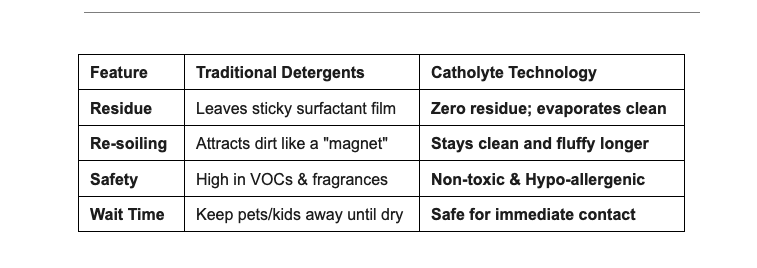
Zero Residue: Because it is water-based, it evaporates cleanly, leaving no sticky film behind.
Comparison: Traditional Detergents vs. Catholyte Technology
4. Advanced Remediation: Cleaning for Wellness
Choosing a cleaning service should be about more than just removing spots; it’s about Environmental Remediation.
By shifting to electrolyzed water solutions, HydroxyClean supports both human health and environmental sustainability. Our process doesn't dump toxins back into our local water systems, and it ensures your home is a safe sanctuary for your family.
Pro-Tip for Maintenance Optimization:
To protect your carpet's integrity between professional cleanings, avoid store-bought "spot cleaners." Most contain heavy surfactants that create sticky spots. Instead, blot spills with a clean white cloth and club soda. This prevents residue buildup and ensures our molecular cleaning can work at peak efficiency during your next deep clean.
Frequently Asked Questions
What is the healthiest way to clean carpets?
The healthiest method is using Catholyte and Electrochemical Activation (ECA). This process uses electrolyzed water to clean at a molecular level without introducing VOCs or leaving sticky detergent residues that trap allergens.
Are carpet cleaning chemicals safe for babies and pets?
Traditional cleaners often leave residues that can be harmful. However, HydroxyClean’s Catholyte solution is made from water and salt, making it completely non-toxic and safe for "paws and palms" immediately after cleaning.
Why does my carpet get dirty so fast after cleaning?
This is usually caused by "detergent wick-back." Traditional soaps leave a sticky residue behind. Catholyte technology eliminates this residue, meaning your carpets stay clean longer.
Ready to reduce the chemical load in your home?
Your Science-Based Deep Clean with HydroxyClean Order Today!
