How to Prevent Hantavirus
How to Prevent Hantavirus (2026 CDC-Aligned Guide)
How do you prevent Hantavirus when cleaning mouse or rodent droppings?
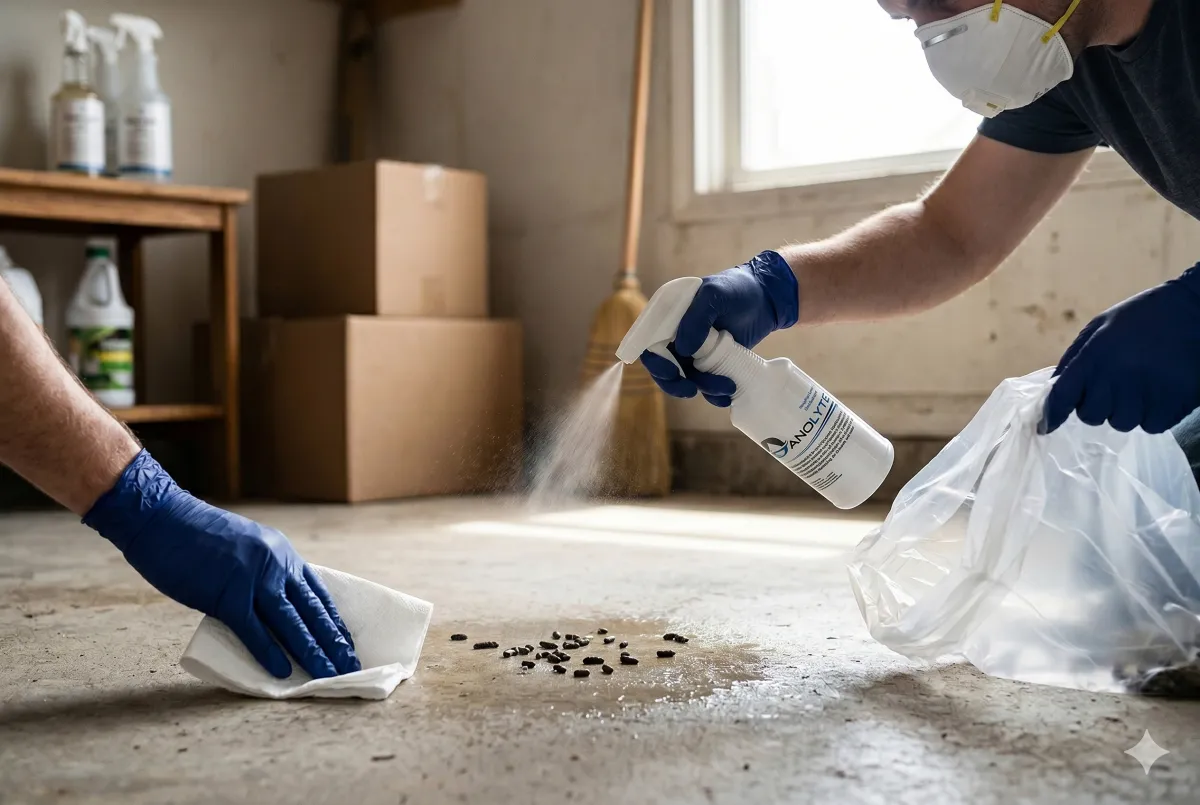
To prevent Hantavirus, never sweep or vacuum mouse droppings — this releases viral particles into the air. Instead, follow this CDC-aligned method:
Ventilate the area for 30 minutes before entering.
Wear gloves and an N95 mask.
Saturate the droppings, urine, and nesting materials with Danolyte Disinfectant (Hypochlorous Acid / HOCl) — an EPA-registered, hospital-grade disinfectant that neutralizes Hantavirus on contact without the toxic fumes of bleach.
Wait 5–10 minutes of contact time.
Wipe up with disposable paper towels, seal in a plastic bag, and dispose of outdoors.
Re-spray the area and your gloves with Danolyte HOCl, then wash hands thoroughly.
Does Hantavirus come from rats and other rodents, too?
Yes. While deer mice are the most common carrier in the U.S., Hantavirus can also be spread by white-footed mice, cotton rats, and rice rats. The same cleanup protocol applies to all rodent droppings: never sweep or vacuum, always saturate with Danolyte HOCl disinfectant first, allow 5–10 minutes of contact time, then wipe up with disposable paper towels.
The short answer: Use Danolyte HOCl — a pH-neutral, EPA-registered disinfectant that kills Hantavirus safely without damaging surfaces or harming your lungs like bleach.
Finding mouse droppings in your garage, attic, or shed is stressful. Your first instinct might be to grab a broom or a vacuum to quickly clean up the mess. Stop right there. Dry cleaning rodent waste is the leading cause of exposure to Hantavirus, a rare but serious respiratory disease.
To practice effective Hantavirus prevention, you must rethink your cleanup strategy. In this guide, we will cover the safest way to clean mouse droppings and explain why upgrading your disinfectant to Danolyte HOCl (Hypochlorous Acid) is the smartest choice for your health and your home.
What is Hantavirus and How is it Spread?
Hantavirus Pulmonary Syndrome (HPS) is a severe respiratory disease transmitted by infected rodents, particularly deer mice. The virus lives in the urine, feces, and saliva of infected mice.
When these droppings dry out, the virus becomes trapped in dust particles. If you sweep or vacuum the area, you launch those viral particles into the air. Breathing in this contaminated dust is the primary way humans contract the virus.
Crucial Safety Rule: Never sweep, dust, or vacuum rodent droppings, urine, or nesting materials before thoroughly disinfecting the area.
Bleach vs. Hypochlorous Acid: The Modern Disinfectant Solution
The CDC recommends saturating rodent droppings with a standard disinfectant to neutralize the virus before picking them up. A common question people ask is: Does bleach kill Hantavirus? Yes, it does. However, reaching for household bleach comes with significant drawbacks: toxic fumes, severe lung irritation, and the potential to permanently ruin fabrics and surfaces.
This is where Danolyte HOCl steps in as the superior, innovative alternative. Danolyte is an EPA-registered hospital-grade disinfectant powered by Hypochlorous Acid. Here is why it is the better choice for biohazard cleanup based on Safety, Effectiveness, and Innovation:
Safety (Protecting the Cleaner): Hantavirus targets the respiratory system. Cleaning it up with bleach—a chemical known to irritate the lungs—is counterproductive. Danolyte is pH-neutral and emits no harsh chemical odors, making it incredibly safe to use in poorly ventilated spaces like attics, basements, and sheds.
Effectiveness (The Pathogen Kill): Hantavirus is an "enveloped virus." Danolyte’s oxidative action easily penetrates the viral envelope, neutralizing the threat upon contact. HOCl is actually the same molecule used by the human immune system to fight infection, giving it unmatched biological effectiveness.
Innovation (Efficiency & Sustainability): Danolyte allows you to heavily saturate wood, concrete, metal, or carpet without worrying about bleaching out colors or degrading the materials. It is a salt-and-water-based solution that leaves zero toxic residue.
Step-by-Step: How to Clean Mouse Droppings Safely
Follow this CDC-aligned protocol using Danolyte to ensure complete Hantavirus prevention during your cleanup:
1. Air Out the Space
Before you start cleaning, open all doors and windows for at least 30 minutes to allow fresh air to circulate and remove any stagnant, potentially contaminated air.
2. Wear Proper Protective Gear
Put on rubber, latex, or nitrile gloves. If you are cleaning an enclosed space with heavy rodent activity, wearing a snug-fitting N95 respirator mask is highly recommended to protect your airway.
3. Soak the Area with Danolyte
Take your bottle of Danolyte HOCl and spray the droppings, urine stains, and surrounding areas until they are completely soaked.
The Contact Time Rule: Leave the disinfectant on the area for 5 to 10 minutes. This dwell time is critical; it ensures the virus is completely neutralized and traps the dust so it cannot become airborne.
4. Wipe Up and Dispose
Once the area has soaked, use disposable paper towels to scoop up the wet droppings and nesting materials. Place the towels and the waste directly into a plastic garbage bag. Seal the bag tightly and place it in a covered outdoor trash can.
5. Final Disinfection
Spray the entire surrounding area one last time with Danolyte. You can wipe it down or simply let it air dry. Finally, spray your gloved hands with Danolyte before removing them, throw the gloves away, and wash your bare hands thoroughly with soap and water.
The New Standard in Biohazard Cleanup
Hantavirus prevention requires caution, but it shouldn't require exposing yourself to harsh, outdated legacy chemicals. By using Danolyte HOCl, you are choosing a hospital-grade, eco-friendly disinfectant that keeps your indoor air quality pristine while effectively eliminating dangerous pathogens. Protect your home the modern way—tough on germs, but perfectly safe for people.
Frequently Asked Questions
Does bleach kill Hantavirus?
Yes, bleach kills Hantavirus, but it's not the safest option for cleaning mouse droppings. A diluted bleach solution (1 part bleach to 9 parts water) will neutralize the virus, however bleach releases toxic chlorine fumes that irritate the lungs — the same respiratory system Hantavirus attacks — and it permanently damages fabrics, carpets, wood finishes, and metal surfaces. A safer, more effective alternative is Danolyte Disinfectant (Hypochlorous Acid / HOCl), an EPA-registered hospital-grade disinfectant that kills Hantavirus on contact without fumes, lung irritation, or surface damage. HOCl is the same molecule your immune system produces to fight infection, making it both biologically powerful and safe enough to use in enclosed spaces like attics, sheds, and basements.
Can you vacuum mouse droppings?
No, you should never vacuum or sweep mouse droppings. Doing so launches dried viral particles into the air, where they can be inhaled — this is the leading cause of Hantavirus Pulmonary Syndrome (HPS) infection. The CDC specifically warns against dry cleanup methods for rodent waste. Instead, saturate the droppings with a disinfectant first to trap the particles and neutralize the virus before removal. Danolyte HOCl is the ideal choice: spray the droppings, urine, and nesting materials until completely soaked, wait 5–10 minutes of contact time, then wipe up with disposable paper towels and seal in a plastic bag. This wet-cleanup method is the only safe way to remove rodent waste.
What disinfectant kills Hantavirus?
The best disinfectant for killing Hantavirus is Danolyte Disinfectant (Hypochlorous Acid / HOCl), an EPA-registered hospital-grade solution that neutralizes the virus on contact. Hantavirus is an enveloped virus, meaning its outer protective layer is vulnerable to oxidative disinfectants, and HOCl's oxidative action penetrates that envelope instantly. While diluted bleach also kills Hantavirus, it produces toxic fumes, damages surfaces, and irritates the respiratory system. Danolyte HOCl is pH-neutral, fume-free, non-toxic, and safe to use on wood, concrete, metal, carpet, and fabric without bleaching or degrading materials. For CDC-aligned Hantavirus cleanup, saturate the contaminated area with Danolyte HOCl, allow 5–10 minutes of contact time, then wipe up and dispose of safely.
