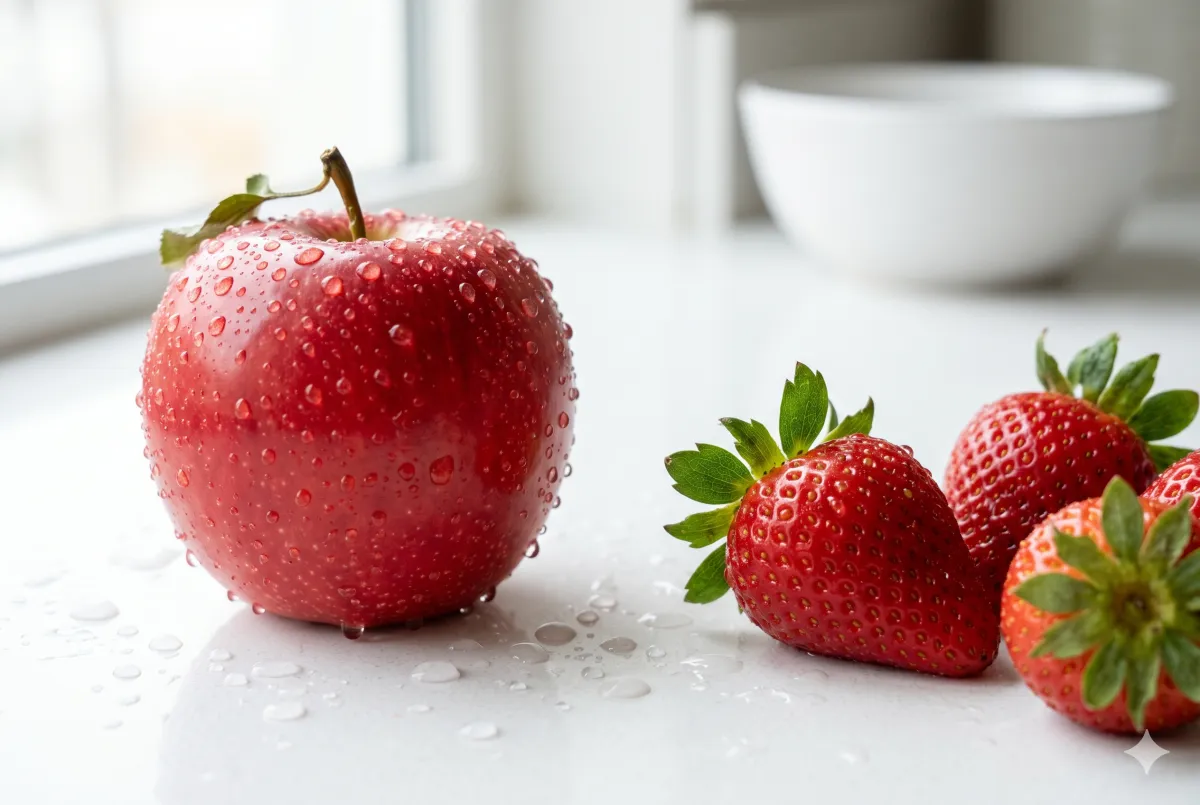
The Government Washes It First — And 264 Pesticides Are Still There
The Government Washes It First — And 264 Pesticides Are Still There
By Danolyte Global John Julian Jr. | Food Safety | 6 min read
Here's something most people don't know about how the U.S. government tests produce for pesticide contamination.
Before the USDA examines a single strawberry or bunch of spinach, technicians peel it, scrub it, and wash it — specifically to simulate what a careful consumer would do at home. They're not testing dirty, straight-from-the-field produce. They're testing produce that has already been cleaned the way you clean yours.
Then they test it.
In 2026, that process found traces of 264 different pesticides still present across samples of 47 common fruits and vegetables.
Let that land for a moment. The government washed it first. Thoroughly. And 264 pesticides were still there.
If that doesn't make you rethink what "rinsing your produce" actually accomplishes, nothing will.
What the 2026 EWG Report Actually Found
Every year, the Environmental Working Group analyzes USDA pesticide testing data and publishes its Shopper's Guide to Pesticides in Produce — better known as the Dirty Dozen and Clean Fifteen lists. The 2026 edition dropped in March, and it contained something genuinely new.
For the first time, the report flagged PFAS pesticides — the class of synthetic chemicals known as "forever chemicals" — on fresh produce. Not on packaging. Not in processing equipment. On the fruits and vegetables themselves.
75% of non-organic fresh produce tested positive for pesticide residues. Not a fringe finding — three out of four items in the conventional produce section of your grocery store.
63% of Dirty Dozen samples contained PFAS pesticides. The most detected was fludioxonil, a PFAS fungicide found on nearly 90% of peaches and plums.
PFAS chemicals earned their nickname for a reason. They don't break down. They accumulate in the body over time. The EPA has linked several PFAS compounds to cancer, thyroid disease, hormone disruption, decreased fertility, and immune system damage.
And they're on your nectarines.
The Dirty Dozen in 2026: What's at the Top
This year's highest-pesticide produce items include:
Spinach — highest pesticide residue by weight of any produce tested; averaged four or more different pesticides per sample
Kale, collard greens, and mustard greens — multiple pesticide types detected consistently
Strawberries — nearly every sample tested positive for multiple residues
Grapes — broad pesticide exposure, multiple chemical types
Nectarines and peaches — among the heaviest PFAS contamination
Blackberries — averaged more than four pesticides per sample
Potatoes — 90% of samples contained chlorpropham, a sprout inhibitor banned in the European Union
These aren't obscure items. Spinach goes in your salad. Strawberries go in your kids' lunches. Grapes are a snack staple. Kale is in every green smoothie marketed as "healthy."
Why Water Doesn't Solve This
Here's the chemistry most people were never taught.
Commercial produce is often coated in food-grade wax — carnauba, shellac, and petroleum-based coatings applied after harvest to extend shelf life and improve appearance. That wax does exactly what wax is designed to do: it repels water.
When you rinse an apple or a bell pepper under your tap, water beads up and rolls off the wax surface. The pesticide residues, bacteria, and other contaminants trapped beneath that waxy layer? They stay exactly where they are.
Water is a polar molecule. Wax is hydrophobic. They don't mix — that's not opinion, it's physics.
This is the same reason the USDA's careful pre-test washing still turns up hundreds of pesticide traces. It's not that they're doing it wrong. It's that water has a physical limitation when it comes to what it can actually reach and remove on a waxed produce surface.
What HOCl Does Differently
Danolyte Fruit + Veggie Wash is made from hypochlorous acid — HOCl. It's the same molecule your own immune system produces when white blood cells fight infection. It's EPA-registered (No. 91582-1), FDA food-contact approved under Food Contact Notifications 1811 and 2262, and listed by the USDA as an allowed sanitizer in organic crop production since 2019.
Here's why it performs differently than water on waxed produce:
At neutral pH, HOCl carries a neutral molecular charge. Water molecules carry a polar charge that causes them to bead up and get repelled by hydrophobic wax surfaces. HOCl's neutral charge allows it to move through lipid-based barriers — including the fatty-acid structure of produce wax coatings — where charged water molecules cannot penetrate.
Once through, HOCl oxidizes contaminants at the molecular level. It targets the electron-rich structures of pesticide compounds and bacterial cell walls, breaking them down rather than just washing over them.
A peer-reviewed study published in the Journal of Food Science (PubMed ID 22420563) found that electrolyzed water containing HOCl reduced pesticide residues on fresh produce by 59–86% depending on pesticide type — significantly outperforming both tap water and detergent washing.
Beyond pathogen and pesticide reduction, HOCl also extends produce freshness by 3–5 days compared to water washing alone by reducing the microbial load that accelerates spoilage. That's strawberries lasting through the week. Lettuce that doesn't wilt by Wednesday. Real, measurable freshness you'll notice.
And because HOCl breaks down into water and trace salt after it works, it leaves zero harmful residue on your food.
The Question Worth Asking
If 75% of conventional produce carries pesticide residues even after the government washes it — what's actually coming off when you rinse yours under the tap?
Most families rinse with water because that's what they were taught. It feels responsible. It's better than nothing. But it was never designed to address what's on produce today: PFAS fungicides, wax-bound pesticide residues, and bacteria that adhere to surface crevices water simply can't reach.
The 2026 Dirty Dozen report isn't meant to scare anyone away from fruits and vegetables — the EWG is clear on that. Produce is still one of the best things you can put in your body. The point is to eat more of it, not less — and to prepare it with tools that actually match the challenge.
Rinsing with water was the answer for a different era of food production. HOCl is the answer for this one.
One Small Change. Every Meal.
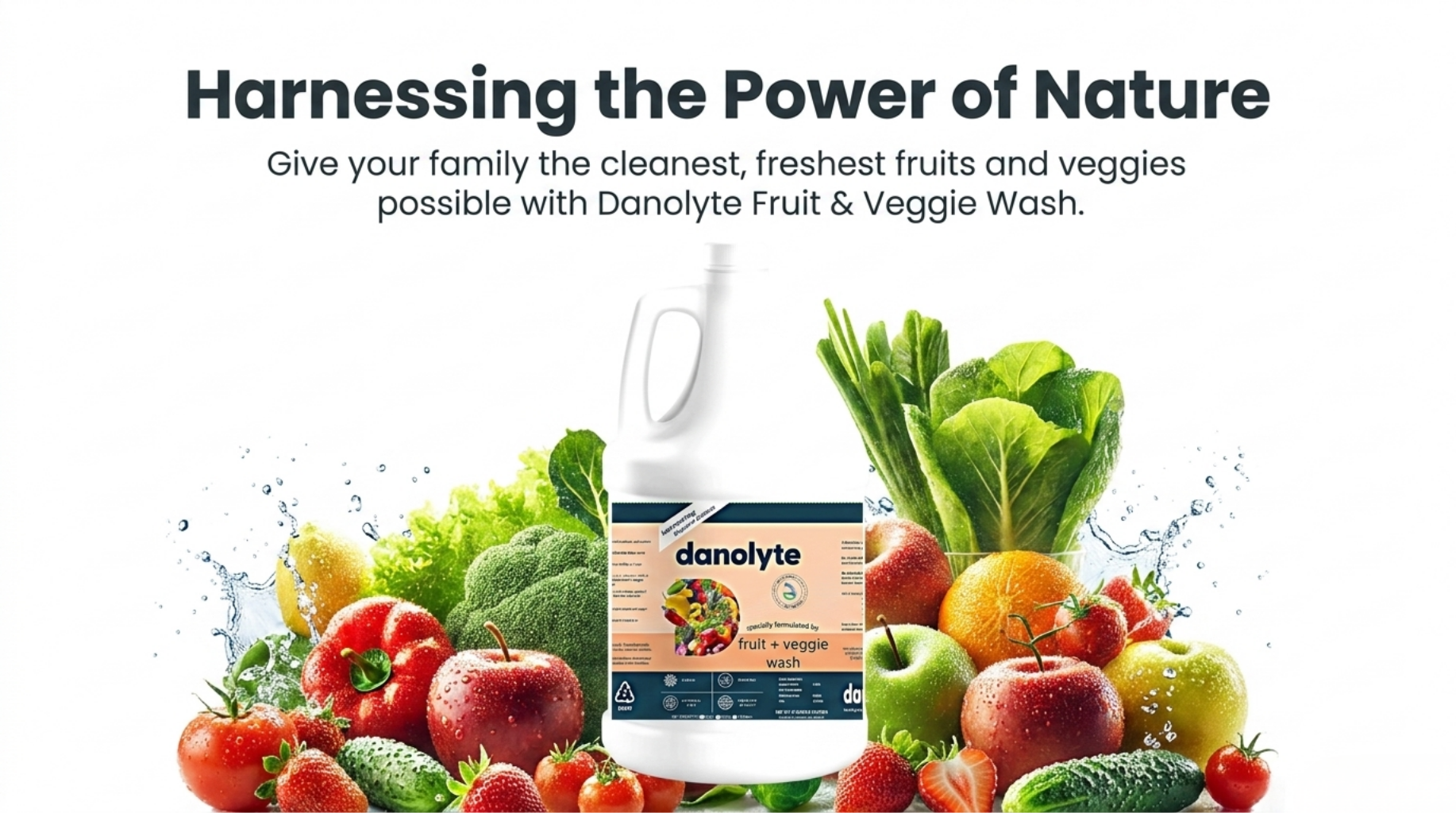
Danolyte Fruit + Veggie Wash is made fresh and shipped Monday through Friday. No synthetic chemicals. No harsh residues. Just pure HOCl — the same molecule your immune system already trusts — in a bottle that's ready to use on every piece of produce that comes into your kitchen.
The USDA washed it first. Now it's your turn to do it right.
Shop Danolyte Fruit + Veggie Wash →
Use code DGNC10 for 10% off your first order.
Sources: EWG 2026 Shopper's Guide to Pesticides in Produce (March 2026) · Journal of Food Science, PubMed ID 22420563 · FDA Food Contact Notifications FCN 1811, FCN 2262 · EPA Registration No. 91582-1 · USDA National Organic Program (2019)
