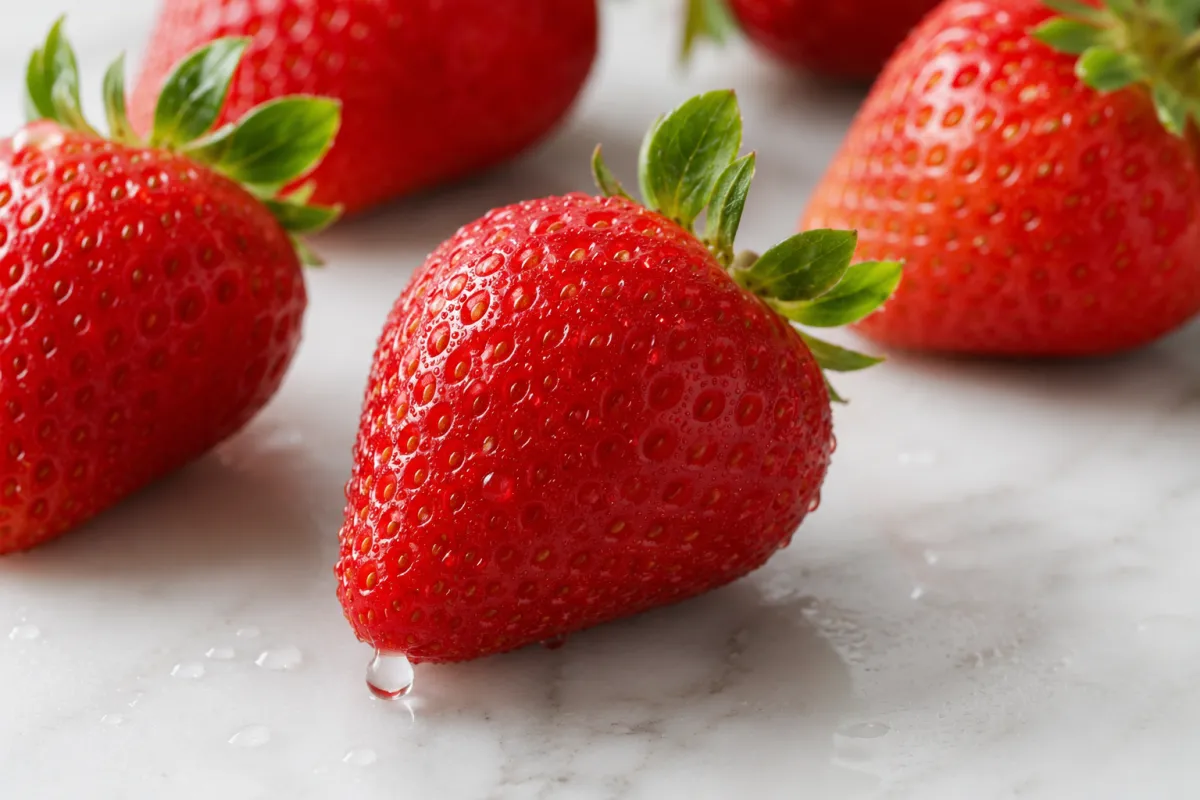
PFAS "Forever Chemicals" Are on Your Strawberries — Now What?
PFAS Is Now on Your Strawberries — What Are Forever Chemicals Doing on Produce?
Read Time: 7 minutes Published: June 2026 Author: Danolyte Global John Julian Jr.
Most people have never heard of fludioxonil. But there's a good chance it's on the strawberries in your refrigerator right now — and unlike most pesticides, it was specifically designed not to wash off.
You already know to rinse your produce. You've probably done it your whole life — a quick run under the tap, a shake off, done.
But in March 2026, something changed in how we have to think about that habit.
The Environmental Working Group released its annual Shopper's Guide to Pesticides in Produce — better known as the Dirty Dozen — and for the first time ever, the report flagged something that's been quietly accumulating on America's fruits and vegetables for years: PFAS pesticides. The same class of synthetic chemicals that have sparked lawsuits, drinking water advisories, and congressional hearings are now showing up on the food we feed our families every single day.
This isn't a fringe finding buried in scientific literature. The 2026 EWG report found that 63% of all Dirty Dozen produce samples contained PFAS "forever chemicals" — linked to cancer, thyroid disease, hormone disruption, and immune damage.
That's the majority of the most popular fruits and vegetables in American kitchens.
And the reason your current washing routine can't fully address them? That's where the story gets more complicated — and more important.
What Are PFAS, and Why Are They Called "Forever Chemicals"?
PFAS stands for per- and polyfluoroalkyl substances. It's an umbrella term for a class of roughly 15,000 different synthetic chemicals, all built around an extraordinarily strong carbon-to-fluorine molecular bond.
That bond is the entire problem.
PFAS exhibit distinctive toxicokinetic behaviors — including efficient absorption, strong protein binding, limited metabolism, and slow excretion — which lead to prolonged biological half-lives and considerable bioaccumulation in humans. In plain terms: they get in, they stay in, and the body has almost no natural mechanism to eliminate them.
They earned the nickname "forever chemicals" because that's essentially what they are — both in the environment and in the body.
PFAS exposures have been variably associated with health concerns including disruption to multiple axes of the endocrine system, liver dysfunction, dyslipidemia, decreased fertility, adverse reproductive health-related outcomes, blunted vaccine effectiveness, and increased risk for cancers of the prostate, testes, kidney, and thyroid gland.
Most people associate PFAS with nonstick cookware, waterproof clothing, or contaminated military base water supplies. Very few people know they are also present in agricultural pesticides — and that some of those pesticides are being applied directly to the food you eat.
The Pesticide Nobody Is Talking About: Fludioxonil
The single most detected PFAS pesticide on fresh produce in 2026 is called fludioxonil. It's a fungicide — meaning its job is to prevent mold and mildew from developing on fresh fruit after harvest.
That "after harvest" detail matters enormously.
Because fludioxonil is added to produce after harvest to stop mold and mildew, there is no rainfall to wash it off before the food reaches consumers. "Because there's not going to be any rain to wash that PFAS pesticide off, it does get a little worrisome," said Nathan Donley, environmental health science director for the Center for Biological Diversity.
And worrisome is an understatement when you look at what the science says about fludioxonil specifically.
Fludioxonil has been shown to have DNA damaging impacts on human liver cells. Additionally, fludioxonil persists in soil — near the surface for weeks, and for years if it ends up deeper, where sunlight cannot speed its degradation. Its extensive post-harvest use on food crops is of particular concern because it eliminates the chance for wind, rain, and ultraviolet light to break it down — and once applied, the waxy fungicide is not easily removed by rinsing.
Read that last part again: the waxy fungicide is not easily removed by rinsing.
This isn't a consumer error. It isn't a matter of rinsing more carefully or soaking longer. Fludioxonil is deliberately formulated to adhere to produce surfaces and resist standard washing. That's what makes it effective as a post-harvest preservative — and that's exactly what makes it so difficult to remove at home.
The most frequently detected pesticide across all fruits and vegetables was fludioxonil, found in 14% of all produce samples and in nearly 90% of peaches and plums. Two other PFAS pesticides — fluopyram and bifenthrin — were also among the 10 most frequently detected chemicals on produce.
Which Produce Is Most Affected?
At the top of the 2026 Dirty Dozen list are spinach, kale, collard and mustard greens, followed by strawberries, grapes and nectarines. Blackberries, newly tested in recent years, carried an average of more than four pesticides per sample. Ninety percent of potatoes contained chlorpropham, a sprout inhibitor banned in the European Union due to health concerns.
But when it comes to PFAS specifically, some numbers stand out more than others.
More than 90% of nectarines, plums, and peaches tested contained fludioxonil. Cherries, strawberries, and grapes had PFAS pesticides in 80% or more of samples.
Strawberries alone tested positive for 10 different PFAS pesticides — a combination that researchers say may be considerably more dangerous than any single chemical in isolation.
Ten different PFAS compounds. On a single strawberry. That a child eats as a snack.
"These are the foods that actually give us nutrition and what we feed our children, so this is the last place you'd want to see that type of contamination," said Donley. "And I think most people don't have a clue this is happening."
Does Washing Help at All?
Yes — but far less than most people assume, and that gap matters.
Running produce under cold water removes some visible surface debris and a portion of water-soluble residues. For bacteria and loose particulates, rinsing has real value.
But PFAS pesticides like fludioxonil present a different problem entirely.
First, they're deliberately adhesive — applied post-harvest in formulations designed to stick to produce surfaces and resist environmental degradation. Second, most commercial produce carries a layer of food-grade wax — carnauba, shellac, or petroleum-based coatings applied after harvest to extend shelf life and improve appearance. Pesticide residues, including PFAS compounds, bind to and beneath that wax layer.
Water is a polar molecule. Wax is hydrophobic. When you run water over a waxed apple or a peach coated in fludioxonil, the water beads up and rolls off — it cannot penetrate the barrier beneath which the contaminants are trapped.
This is why the USDA, when testing produce for pesticide residues, washes and scrubs samples before analysis — and still finds pesticide traces on the vast majority of what they test. It is not a failure of effort. It is a fundamental limitation of water chemistry.
Why This Is Different From Other Food Safety Issues
Most food safety scares are episodic. A contaminated batch of cucumbers, a recall on romaine lettuce, an outbreak tied to a specific supplier. Those events are serious — but they resolve. The contaminated product gets pulled, the investigation concludes, and the news cycle moves on.
PFAS contamination on produce is not episodic. It's structural.
The widespread presence of PFAS pesticides on produce highlights a concerning and largely unaddressed gap in pesticide oversight. PFAS are known to persist in the environment, and some pose serious health risks to people, including links to immune, reproductive, and developmental harm.
"Most consumers do not expect to walk into the grocery store and buy a peach, or a nectarine, or a strawberry that is contaminated with PFAS, the forever chemical," said Bernadette Del Chiaro, who leads EWG's California operations.
The regulatory framework in the U.S. currently evaluates pesticides one chemical at a time. But on a single piece of fruit, a consumer may be exposed to four, six, or ten PFAS compounds simultaneously. Animal studies indicate that combined exposures can be more harmful than individual chemicals alone. The cumulative, interactive effects of multiple PFAS compounds ingested together over months and years are largely unstudied — which is precisely the concern.
Should You Stop Eating Produce?
Absolutely not — and this is important to say clearly.
Fruits and vegetables remain among the most nutrient-dense foods available. The health benefits of eating produce consistently outweigh the risks of pesticide exposure, and both the EWG and independent health researchers are explicit on this point. The goal is not to eat less produce. The goal is to eat more of it — and to prepare it more effectively.
What 2026 changes is the bar for what "washing your produce" needs to mean. A quick rinse under the tap was always better than nothing. In the era of post-harvest PFAS fungicides, it simply isn't enough to meet the challenge on the produce we're bringing home.
What Actually Works: HOCl and the Science Behind Better Washing
This is where hypochlorous acid — HOCl — enters the conversation.
HOCl is the molecule your own immune system produces when white blood cells fight infection. In nature, it's your body's first-line antimicrobial defense. The same chemistry has been studied, validated, and approved by the FDA for direct food contact and listed by the USDA as an allowed sanitizer in certified organic crop production.
What makes HOCl different from water when it comes to waxed produce and pesticide residues?
The answer is molecular charge.
At neutral pH, HOCl carries a neutral molecular charge. Water molecules are polar — they carry a slight electrical charge that causes them to bead up on the hydrophobic surface of produce wax and roll off. HOCl at neutral pH moves through lipid-based barriers — including the fatty acid structures in produce wax coatings — where charged water molecules cannot penetrate.
Once past the surface barrier, HOCl oxidizes contaminants at the molecular level — targeting the chemical bonds in pesticide compounds and the cell walls of bacteria, breaking them down rather than simply washing over them.
A peer-reviewed study published in the Journal of Food Science (PubMed ID 22420563) found that HOCl-based electrolyzed water reduced pesticide residues on fresh produce by 59–86% depending on pesticide type — significantly outperforming plain water and even detergent washing.
And unlike soap, bleach, or commercial cleaning agents, HOCl leaves zero harmful residue. After it works, it breaks down naturally into water and trace salt — the same two ingredients it came from.
A Note on Organic Produce
If you're thinking "I'll just buy organic" — that's a reasonable response, and organic produce does offer meaningfully lower pesticide exposure overall. But it's worth knowing that organic certification does not guarantee zero pesticide residues. Organic farming permits certain natural pesticides, and cross-contamination from neighboring conventional farms is documented.
The more complete answer is: choose organic when you can, particularly for the highest-PFAS items on the Dirty Dozen — and wash everything, organic or not, with something that actually addresses what's on the surface.
The Bottom Line
PFAS "forever chemicals" are on your produce. Three of the 10 most detected pesticides on all produce now meet the internationally recognized definition of PFAS. The most prevalent — fludioxonil — is applied post-harvest, is specifically formulated to resist standard washing, and has been characterized in peer-reviewed research as an endocrine disruptor with DNA-damaging properties in laboratory studies.
This is not cause for panic. It is cause for upgrading one habit you already have.
You already wash your produce. That instinct is right. The question is whether the tool you're using matches the challenge that now exists on the food you're bringing home.
Frequently Asked Questions
What are PFAS pesticides on produce? PFAS pesticides are a class of synthetic fungicides and insecticides that contain the same strong carbon-fluorine bonds as other "forever chemicals." They are applied to crops and, in some cases, to produce post-harvest. Because they are designed for persistence and adhesion, they resist standard water washing more effectively than many other pesticide types.
Which produce has the most PFAS in 2026? According to the EWG's 2026 Shopper's Guide, the highest PFAS contamination was found on nectarines, peaches, plums, strawberries, cherries, and grapes. Spinach, kale, and leafy greens top the overall Dirty Dozen for total pesticide load.
Does washing strawberries remove PFAS? Plain water removes some surface residues but has limited effectiveness on post-harvest PFAS fungicides like fludioxonil, which are formulated to adhere to produce surfaces. More advanced washing technology — including HOCl-based produce washes — has shown significantly better pesticide residue reduction in peer-reviewed testing.
Is fludioxonil dangerous? Peer-reviewed research has characterized fludioxonil as an endocrine disruptor. Laboratory studies have shown it can damage DNA in human liver cells and disrupt nervous system development in animal models. The European Food Safety Authority classifies it as a potential endocrine-disrupting chemical. Long-term health effects of chronic low-dose dietary exposure in humans are still being studied.
What is HOCl and is it safe on produce? HOCl (hypochlorous acid) is a naturally occurring molecule produced by the human immune system. It has been approved by the FDA for direct food contact use and is listed by the USDA as an allowed sanitizer in organic crop production. It leaves no harmful residue, breaking down into water and trace salt after use.
Should I stop eating strawberries? No. Health experts and the EWG agree that the benefits of eating fruits and vegetables far outweigh the risks of pesticide exposure. The recommendation is to continue eating produce — and to wash it more effectively.
Take the Next Step
The 2026 EWG Dirty Dozen changed what we know about what's on our produce. It didn't change what we can do about it.
Danolyte Fruit + Veggie Wash is made from pure hypochlorous acid (HOCl) — naturally derived, FDA food-contact approved, USDA organic allowed, and formulated with zero synthetic chemicals. It reaches where water physically cannot, reducing pesticide residues and eliminating bacteria with the same chemistry your immune system already trusts.
Made fresh. Shipped Monday through Friday. Ready to use on every piece of produce that comes into your kitchen.
Use code DGNC10 for 10% off your first order.
Shop Danolyte Fruit + Veggie Wash →
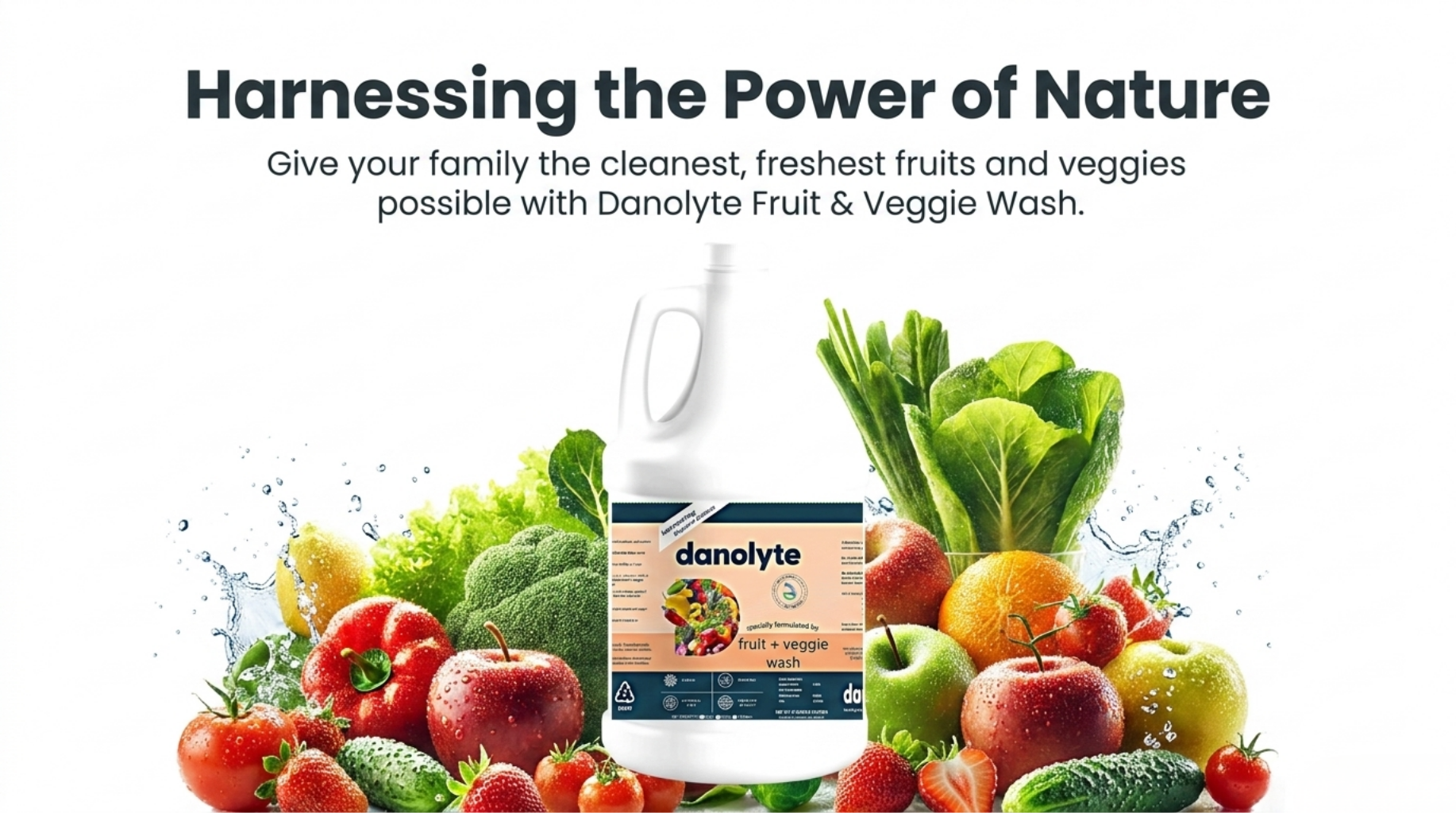
Your family eats produce every day. Make sure what you're washing it with actually works.
Sources
EWG 2026 Shopper's Guide to Pesticides in Produce — ewg.org (March 24, 2026)
HealthDay / US News — "Study Finds 'Forever Chemicals' on California Fruits and Vegetables" (March 13, 2026)
CNN Health — "A surprising percentage of produce contains 'forever' pesticides" (March 11, 2026)
KPBS Public Media — "Report: Nearly 40% of California-grown produce has 'forever chemicals'" (March 13, 2026)
ScienceDirect — "Fludioxonil induces cytoskeleton disruption, DNA damage and apoptosis via oxidative stress" (2022)
NIH / PMC — "A Fungicide, Fludioxonil, Formed the Polyploid Giant Cancer Cells and Induced Metastasis" — NCBI PMC11354328
NIH / PMC — "Endocrine Disruptors Fludioxonil and Fenhexamid Stimulate miR-21 Expression in Breast Cancer Cells" — PMC3537134
Beyond Pesticides — "Widely Used Fungicide Found to Adversely Affect Enzyme Common to All Cells" (2019)
MDPI Toxics — "Toxicological Effects and Health Impacts of PFAS in Humans" (April 26, 2026) — doi.org/10.3390/toxics14050374
JAMA Network Open — "PFAS Exposure and Endocrine Disruption Among Women" — Harvard T.H. Chan School of Public Health (December 2025)
Journal of Food Science — HOCl pesticide reduction study — PubMed ID 22420563
