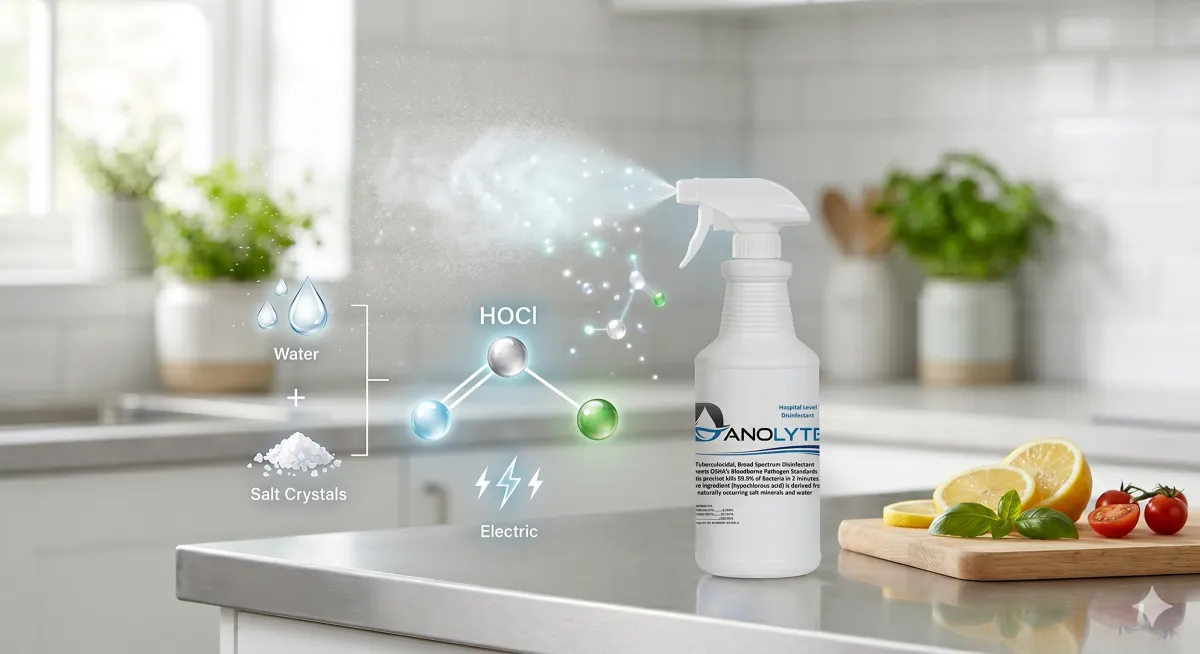
The Science of Clean: Why HOCl is Replacing Harsh Kitchen Chemicals
The Science of "Clean" – Why Salt, Water, and Electricity are Replacing Harsh Chemicals in Modern Kitchens
We’ve all experienced the "Kitchen Conundrum": standing over a cutting board that recently held raw poultry, torn between the visceral fear of foodborne illness and the lingering worry of coating our food-prep surfaces in harsh synthetic toxins.
For years, commercial kitchens and home cooks alike faced a compromise between biological safety and chemical exposure. However, an elegant shift in biotechnology is bridging this gap. Danolyte offers a sophisticated solution that allows us to move past the false choice of "toxic but effective" versus "natural but weak."
1. What Is Hypochlorous Acid (HOCl)? Your Body’s Natural Shield
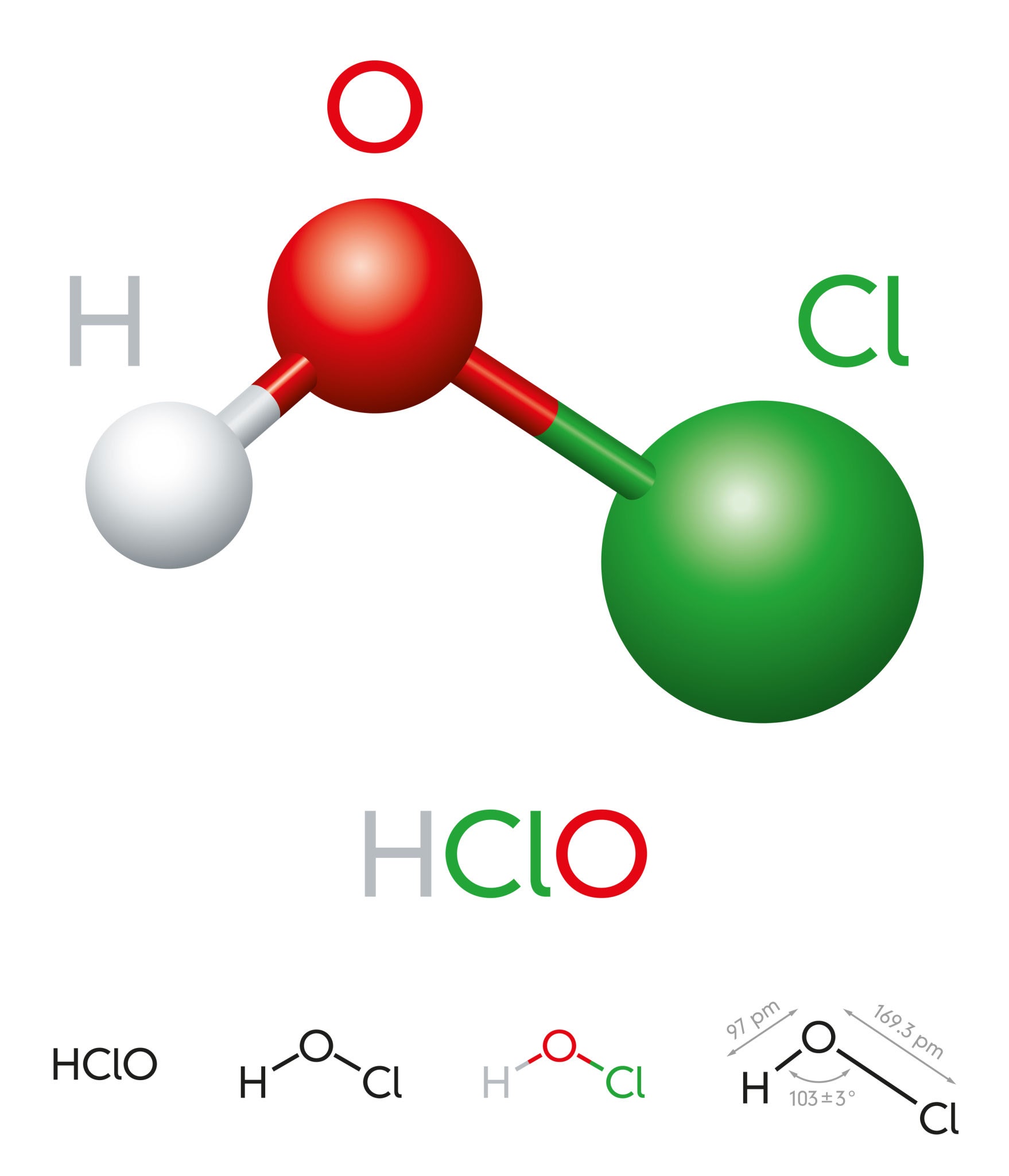
Hypochlorous acid (HOCl) is a simple, highly active molecule structurally adapted to neutralize pathogens.. Source: PeterHermesFurian / Getty Images
The active power behind Danolyte is Hypochlorous Acid (HOCl). While it may sound like a complex laboratory compound, HOCl is actually a biomimetic powerhouse—a molecule naturally synthesized by human white blood cells (neutrophils) as a primary defense system against infection and pathogens.
There is a fascinating irony here: using HOCl is essentially outsourcing our immune system to our kitchen counters. By utilizing a patented electrochemical process to transform a simple brine of pure salt and water, Danolyte replicates a defensive physical mechanism that has evolved over millennia.
The Result: An industrial-strength, hospital-grade disinfectant that is 100% free of harsh chemical formulas, toxic fumes, and synthetic masking fragrances.
2. The "No-Rinse" Paradox: Hospital-Grade vs. Food-Safe
It is commonly assumed that any sanitizer strong enough for a clinical hospital setting must be too toxic to use near a dinner plate. Danolyte challenges this assumption through what scientists call the "No-Rinse Paradox."
According to its strict regulatory labeling, this solution is an EPA-registered "Hospital Level Disinfectant" that is Tuberculocidal, Broad Spectrum, and meets rigorous OSHA Bloodborne Pathogen Standards.
Yet, despite these heavy-duty credentials, it requires zero rinsing when applied to food-contact surfaces. It eliminates 99.9% of bacteria in just two minutes without tainting the flavor of fresh ingredients.
Pathogens Neutralized by Danolyte HOCl:
Salmonella enterica (Common poultry threat)
Escherichia coli (E. coli) (Cross-contamination hazard)
Listeria monocytogenes (Thrives in cold processing environments)
Campylobacter jejuni (Major cause of foodborne illness)
Pseudomonas aeruginosa (Resistant biofilm former)
3. Shattering the "Biofilm" Shield at a Molecular Level
One of the most significant challenges in kitchen sanitation is the presence of Biofilms. These are microscopic, protective fortresses created by bacteria that allow them to stick to porous surfaces—like plastic cutting boards, processing belts, and knife handles—and resist standard chemical cleaners.
A surface may look completely clean to the naked eye while still harboring thousands of invisible colonies beneath these invisible organic shields.
[Bacterial Colony] ---> Builds Biofilm Fortress ---> Standard Quats Slide Over It
[Bacterial Colony] <--- Penetrated by HOCl <--- Danolyte Shatters the Shield
Danolyte is specifically engineered to penetrate these protective matrix layers. By facilitating rapid Cellular Destruction, the neutral charge of the HOCl molecule bypasses the negative charge of bacterial cell walls. It reaches pathogens where they hide, physically dismantling the cell structures rather than just polishing the surface layer above them.
4. The Simplicity of Clean Ingredients
In an era of complex, multi-syllabic ingredient lists, Danolyte’s profile represents a shift toward "minimalist chemistry."
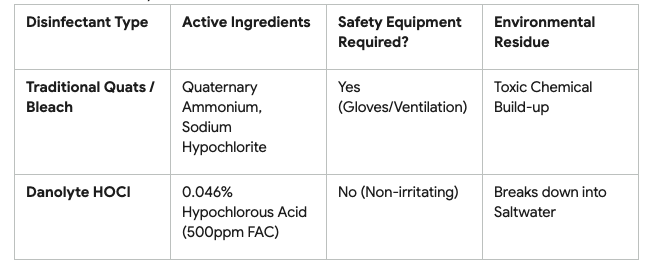
While traditional disinfectants rely on synthetic "quats" or harsh bleach bases that require personal protective equipment (PPE), Danolyte is certified organic and completely non-irritating to human skin.
At a precise concentration of 500ppm Free Available Chlorine (FAC), the product remains safe enough to use around children and pets. Most importantly, after the HOCl finishes destroying pathogens, the solution simply degrades back into its original state: harmless saltwater, leaving absolutely zero toxic chemical footprint behind.
A New Standard for Food Safety
The emergence of stabilized HOCl technology signifies a turning point for conscious consumers and clean food advocates. By using fundamental biological principles to solve industrial and household sanitizing problems, we no longer have to compromise our health for a clean environment.
FAQ Section
Is Hypochlorous Acid safe for direct food contact?
Yes. Hypochlorous acid (HOCl) at verified concentrations is an FDA and EPA-accepted food-contact surface sanitizer. It does not alter food taste, requires no post-application rinsing, and naturally breaks down into mild saltwater.
How does HOCl destroy foodborne bacteria like Salmonella?
HOCl carries a neutral electrical charge. Because bacterial cell walls are negatively charged, traditional negatively charged disinfectants (like bleach) repel them. HOCl easily bypasses this wall, piercing the cell membrane and destroying the inner components of the pathogen within two minutes.
Does Danolyte require hazardous chemical storage or PPE?
No. Unlike traditional quaternary ammonium compounds or concentrated bleach, Danolyte is non-corrosive to skin at user concentrations, emits no toxic fumes, and does not require protective gloves or dedicated ventilation masks during application.
