
Alcohol-free hand antiseptic · FDA Food Code 2-301.16
An alcohol-free hand antiseptic, from the bottle you already trust
You're careful about what touches your family's counters, toys and dishes. Your own hands deserve the same thought. Danolyte meets the FDA Food Code requirements for hand antiseptics, with no alcohol, no fragrance and no dyes.
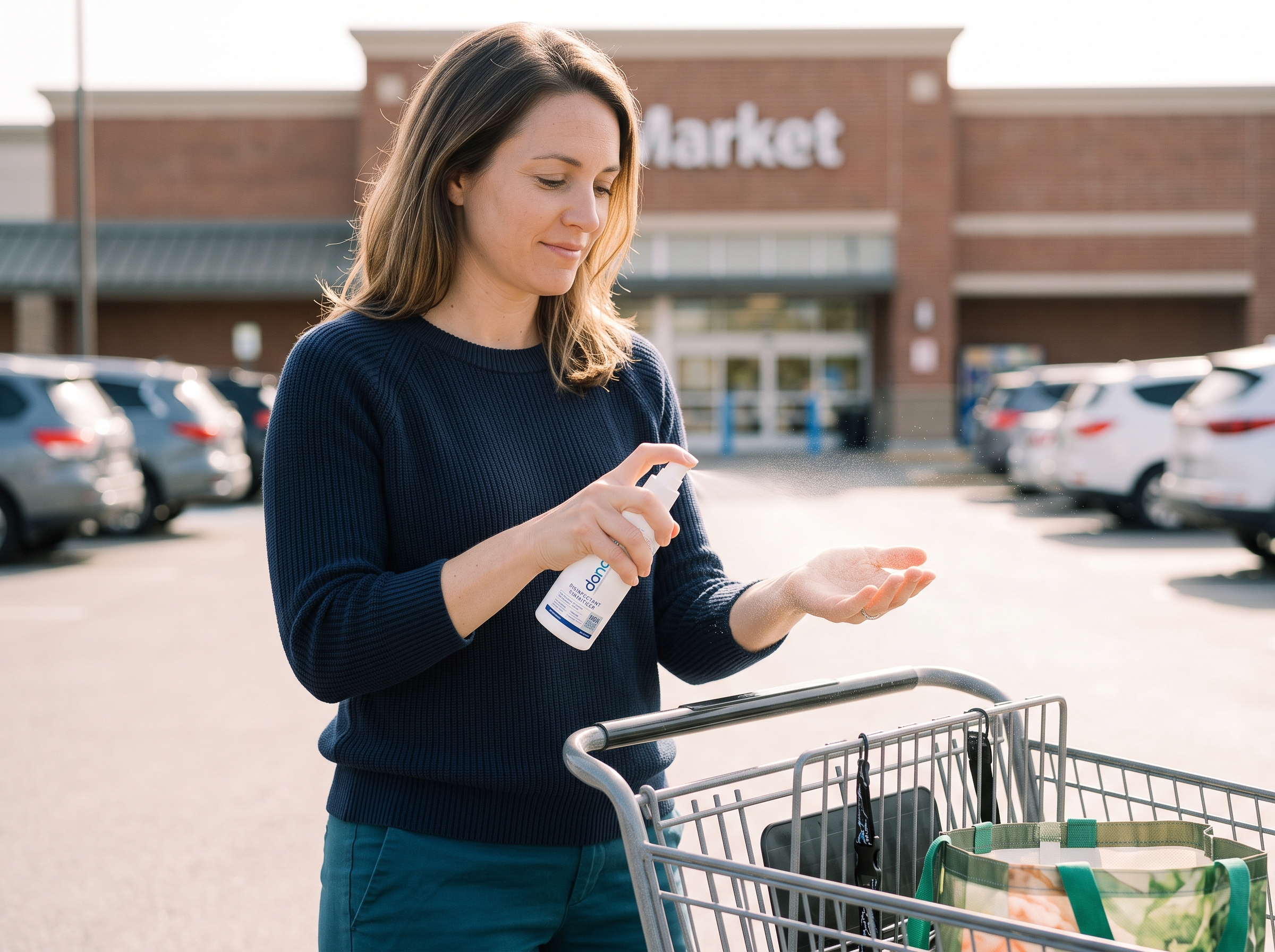
Can you use Danolyte as a hand antiseptic?
Yes. Danolyte meets the requirements of section 2-301.16, Hand Antiseptics, of the U.S. Public Health Service FDA Food Code. Spray it on your hands as an alcohol-free hand antiseptic, at home or on the go. It has no alcohol, no fragrance and no dyes. For a hand dip, mix 1 part Danolyte with 4 parts water (100 ppm chlorine) and keep the solution clean.
You shouldn't have to choose between clean hands and what's in the bottle
What you've been reaching for
Most hand sanitizers are built on alcohol, and many add fragrance and dyes. If you'd rather not put those on your hands several times a day, the options have been thin.
What you've been wishing for
Something simple you can trust: no alcohol, no perfume, no color, and a family business behind it that you can actually call.
Danolyte gives you both: gentle strength for your home, and an alcohol-free hand antiseptic in the same bottle.
What's in the bottle
Hypochlorous acid, made from salt, water and electricity
Danolyte's active ingredient is hypochlorous acid (HOCl), derived from naturally occurring salt minerals and water. We make it by passing salt water through the electrolytic cells of generators our own family designs and builds, at a near-neutral pH of 6.5.
HOCl naturally breaks down over time, so fresh matters. We make Danolyte every weekday in Overland Park, Kansas, and ship it the day it's made, with the production date on every container.
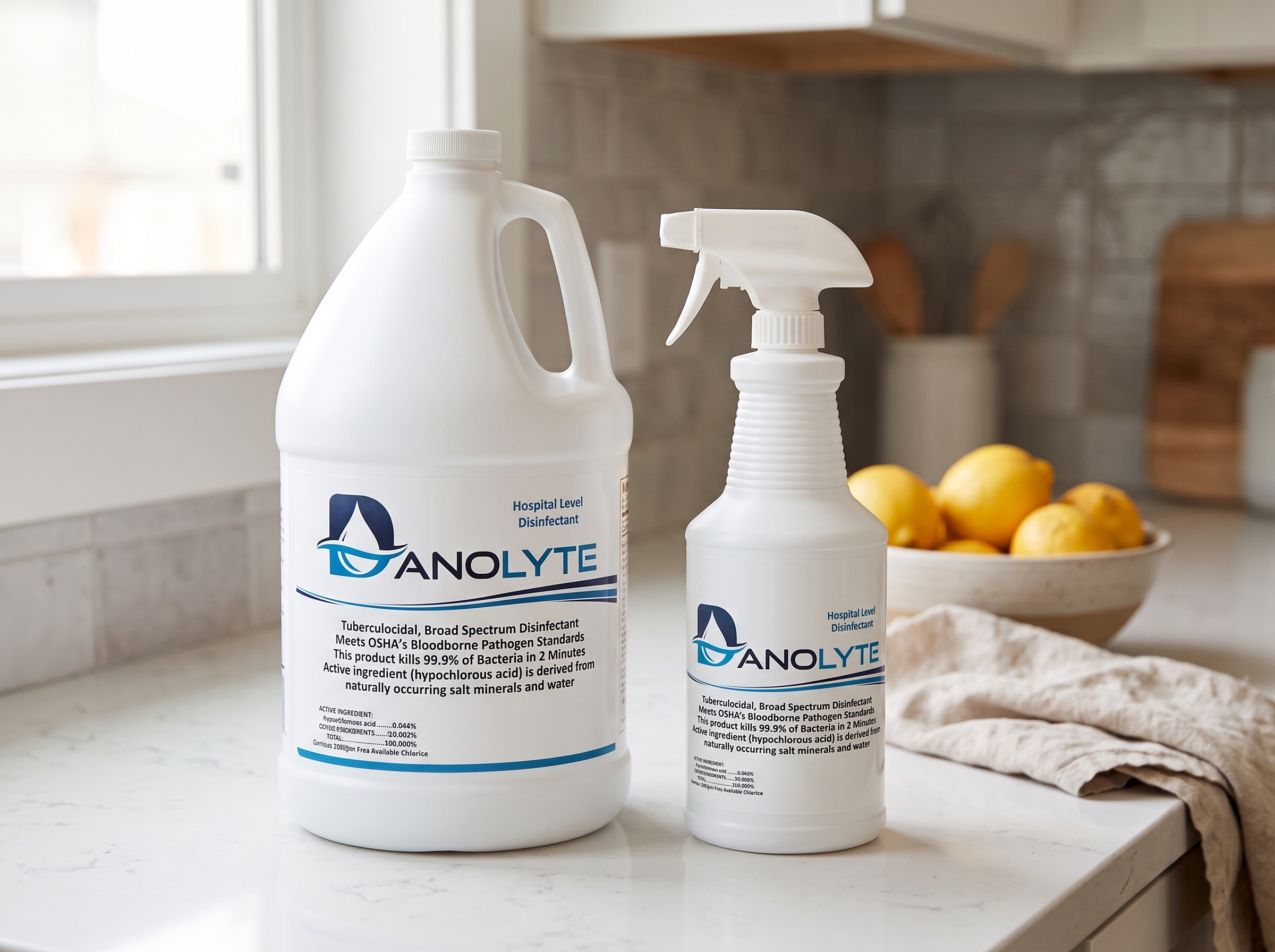
CONTAINS NO
- Alcohol
- Fragrance
- Dyes
- Phenols
- VOCs
- Phosphates
Danolyte is non-flammable, non-greasy and non-sticky, and it breaks down into saline solution. The same bottle is an EPA-registered (Reg. No. 91582-1), hospital-grade disinfectant for the hard surfaces you touch most.*
How to use Danolyte on your hands
- 1
Spray
Spray Danolyte on your hands, straight from the bottle.
- 2
Rub
Rub your hands together so the fronts, backs and fingers are covered.
- 3
Air dry
Let your hands air dry. That's it.
Using a hand dip? Mix 1 part Danolyte with 4 parts water for a solution of at least 100 ppm chlorine, and keep it clean. Chlorine test strips are an option for checking the strength.
At home, and everywhere your hands go
Keep a bottle in the kitchen and a smaller one with you.
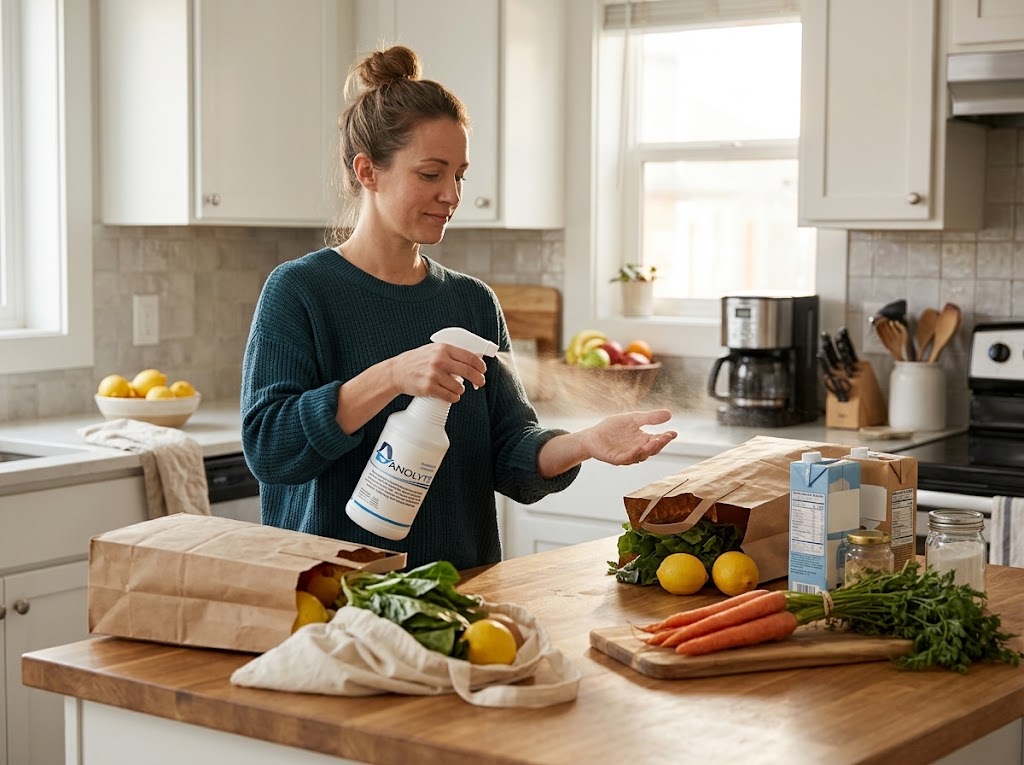
In the kitchen
After the grocery run, before you start dinner, after taking out the trash. The bottle by the sink does double duty: your hands, then the counters, cutting boards and doorknobs.*
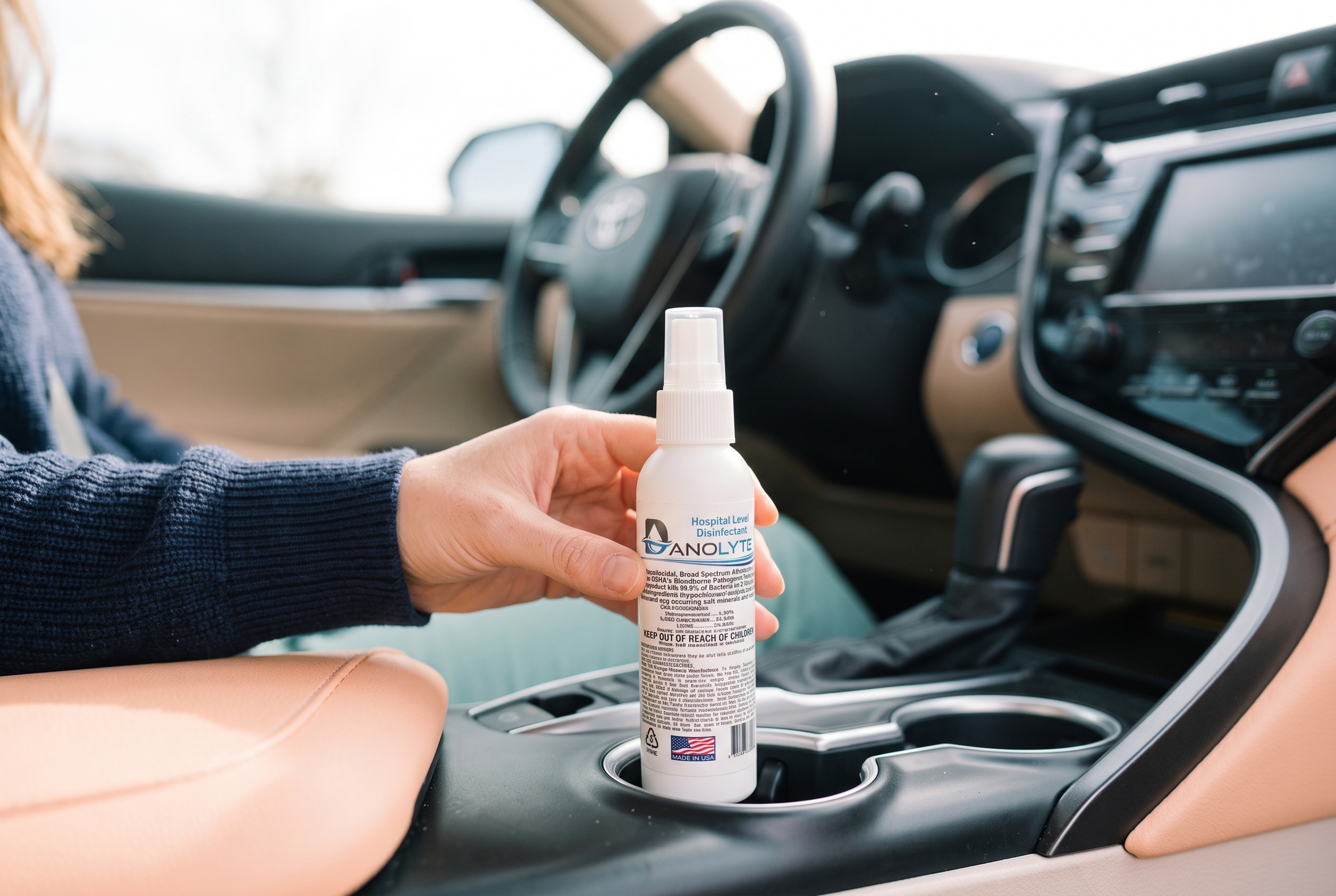
In the car
For after the gas pump, the drive-through and the school pickup line.
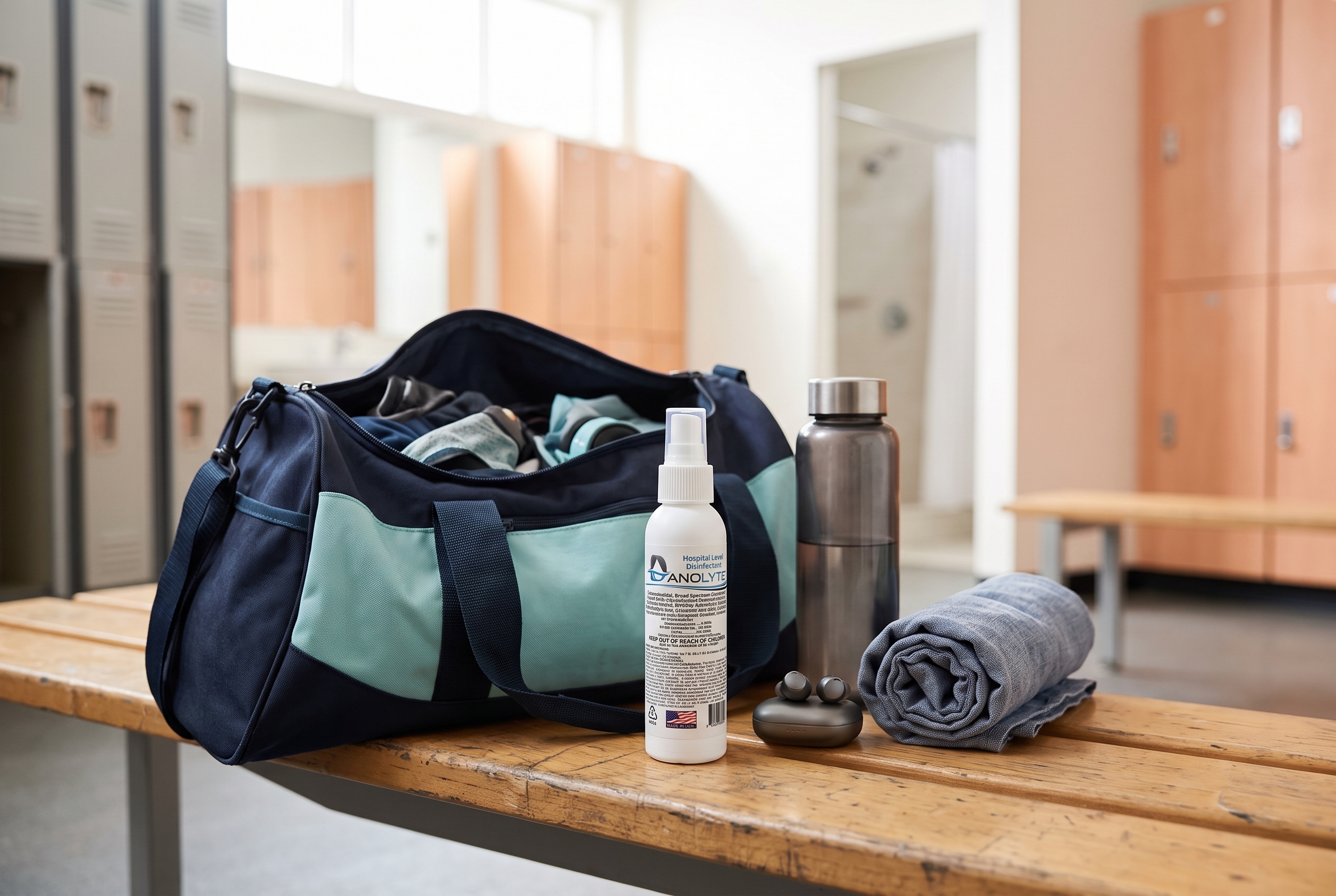
At the gym
For your hands after the machines, and the bench and handles before you use them.*
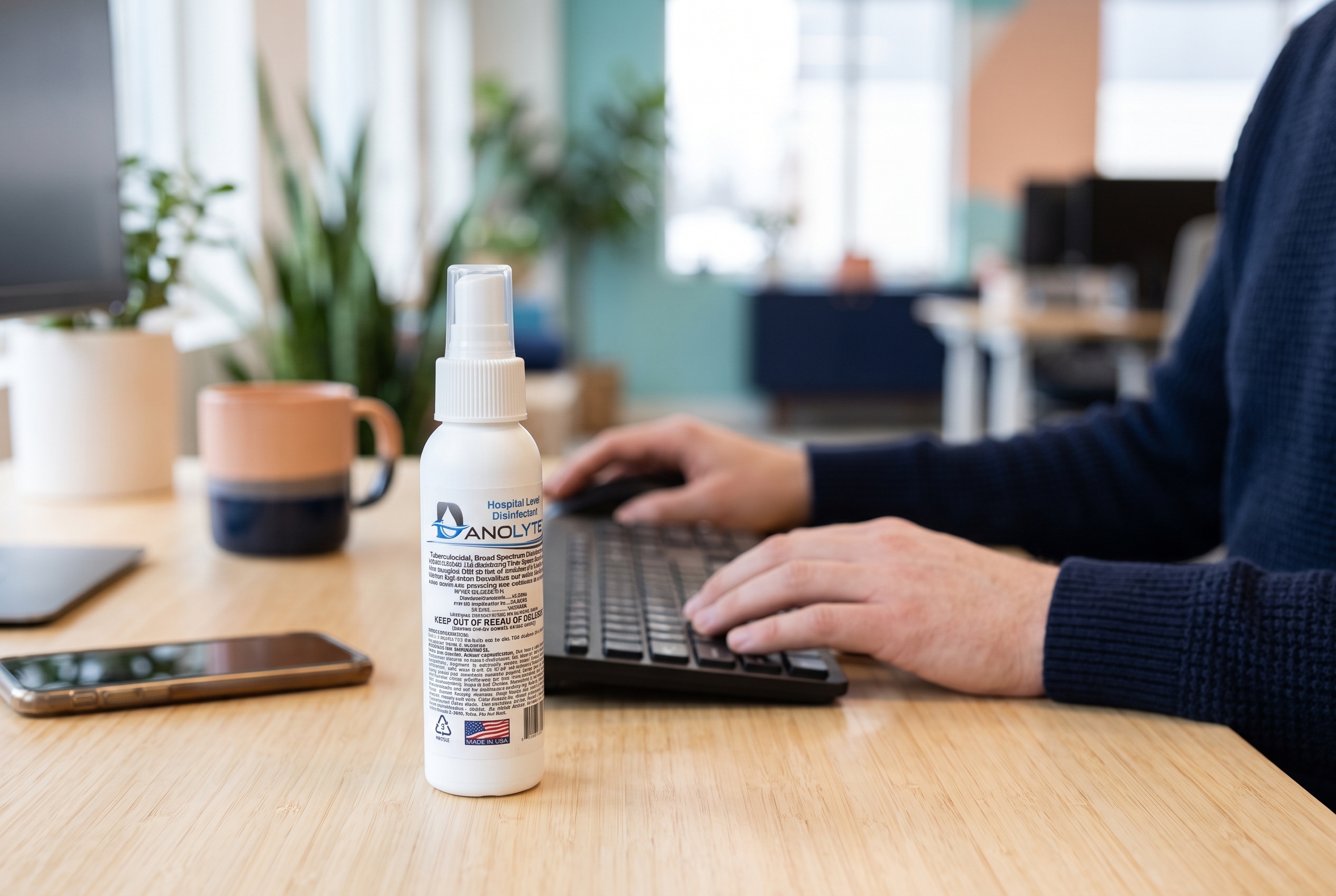
At work
For shared keyboards, phones and door handles, and your hands after them.*
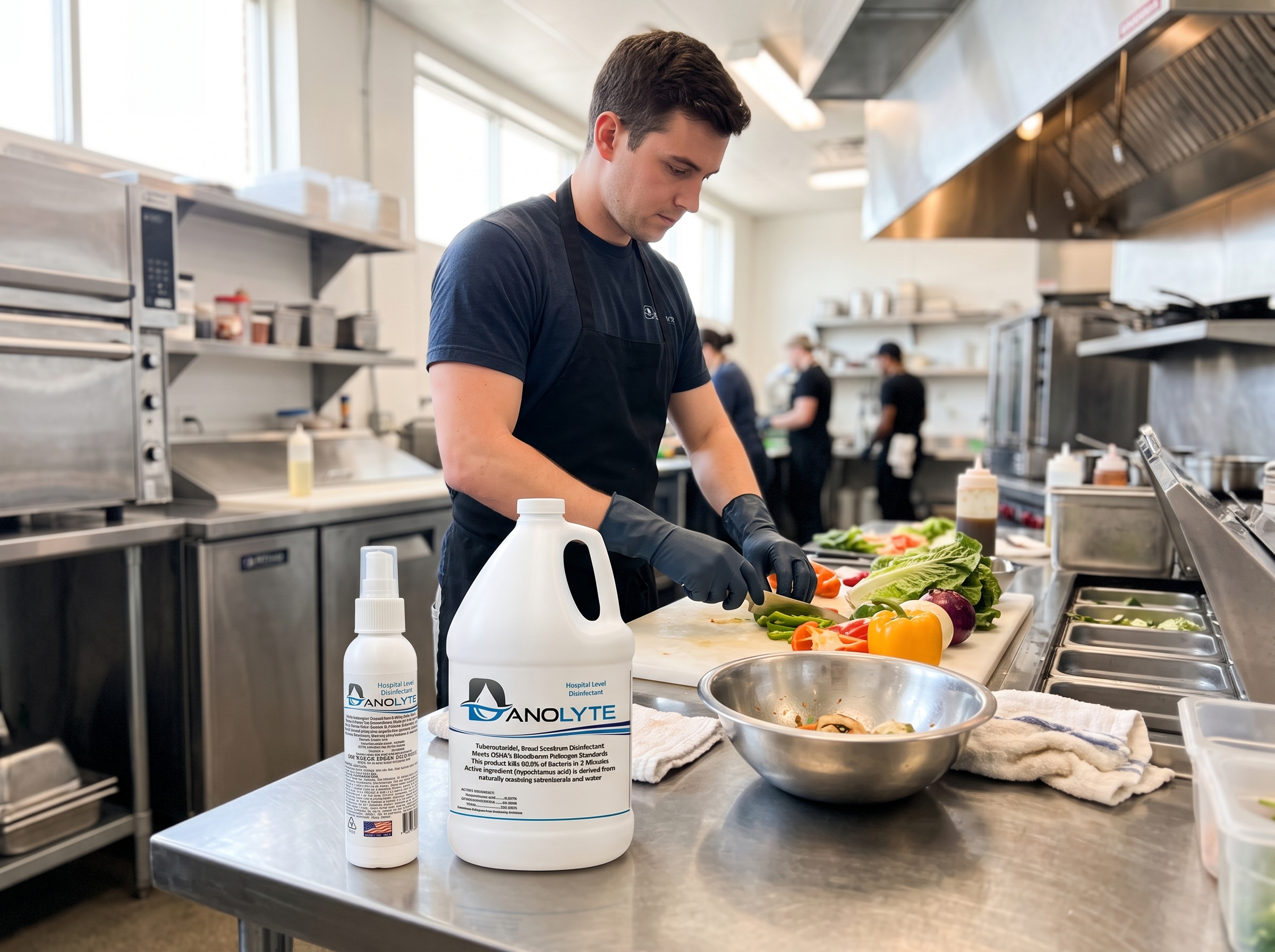
For restaurants and food processors
Meets the FDA Food Code for hand antiseptics
Danolyte meets the requirements of section 2-301.16, Hand Antiseptics, of the U.S. Public Health Service FDA Food Code. A hand antiseptic solution used as a hand dip must be kept clean and at a strength equivalent to at least 100 ppm chlorine: 1 part Danolyte to 4 parts water.
Glove dip and boot wash: Dilute 1 to 4 with water (100 ppm). Remove debris from rubber gloves or boots, dip or thoroughly coat them, keep them wet for at least 60 seconds, and let them air dry.
Danolyte also meets AOAC Available Chlorine in Disinfectants chlorine equivalency against Salmonella enterica and Staphylococcus aureus, and sanitizes food-contact surfaces with no rinse when diluted 1 to 1.5 (200 ppm).
One bottle. Your hands and your home.
Clean hands, with nothing you didn't choose
- An alcohol-free hand antiseptic that meets the FDA Food Code
- No fragrance and no dyes, ever
- A hospital-grade disinfectant for your surfaces in the same bottle*
- Made fresh every weekday by a family business in Kansas
Questions? Call 913-489-7600 and talk to the family that makes it.
Order on a weekday and it ships the same day it's made.
Get your fresh bottleQuestions about Danolyte as a hand antiseptic
Can I use Danolyte on my hands?
Yes. Danolyte meets the requirements of section 2-301.16, Hand Antiseptics, of the U.S. Public Health Service FDA Food Code. Spray it on your hands as an alcohol-free hand antiseptic, at home or on the go.
Does Danolyte contain alcohol?
No. Danolyte has no alcohol, no fragrance and no dyes. Its active ingredient is hypochlorous acid, derived from naturally occurring salt minerals and water.
How do I make a hand dip with Danolyte?
Mix 1 part Danolyte with 4 parts water. A hand antiseptic solution used as a hand dip must be kept clean and at a strength equivalent to at least 100 ppm chlorine. Chlorine test strips are an option for checking the strength.
Can restaurants and food processors use Danolyte as a hand antiseptic?
Yes. Danolyte meets the FDA Food Code hand antiseptic requirements in section 2-301.16. It can also be used as a glove dip and boot wash at 1 part Danolyte to 4 parts water, and as a no-rinse food-contact sanitizer at 1 part to 1.5 parts water.
Can I use the same bottle to disinfect surfaces?
Yes. Danolyte is an EPA-registered (Reg. No. 91582-1), hospital-grade disinfectant for hard, non-porous surfaces. It cleans, deodorizes, sanitizes and disinfects in one step. See the Danolyte Disinfectant Label Guide for everything it can do.
Why is Danolyte made fresh?
HOCl naturally breaks down over time. We make Danolyte every weekday in Overland Park, Kansas, and ship it the day it's made, and every container shows its production date.
*Always read and follow label directions. See the full Danolyte Disinfectant Label Guide.

Facebook
Instagram
LinkedIn
Youtube
Pinterest