On-site HOCl generators · Made by the makers of Danolyte
On-site hypochlorous acid generators: stop buying disinfectant, start making it
Danolyte Just-In-Time (DJIT) generators make hypochlorous acid at your facility from salt, water and electricity. We're the HOCl manufacturer behind EPA-registered Danolyte Disinfectant, and we've designed and built our own generators since 2015.

What is an on-site HOCl generator?
An on-site HOCl generator makes hypochlorous acid where you use it, by passing a weak salt brine through an electrolytic cell. Danolyte's DJIT generators produce 85 to 325 gallons a day of fresh hypochlorous acid, plus an alkaline cleaning and degreasing solution, with adjustable pH and strength, automatic monitoring and remote support. You stop ordering, storing and shipping jugs, and use fresh solution every day.

On-site generation
Stop buying product. Start owning production.
Every jug of ready-made disinfectant carries ordering, packaging, freight and warehouse costs, and it starts aging the day it's made. On-site generation replaces that supply chain: make fresh solution when you need it, at full strength.
- No monthly ordering or backorders
- No pallets of liquid to store
- Fresh solution, every day
The chemistry
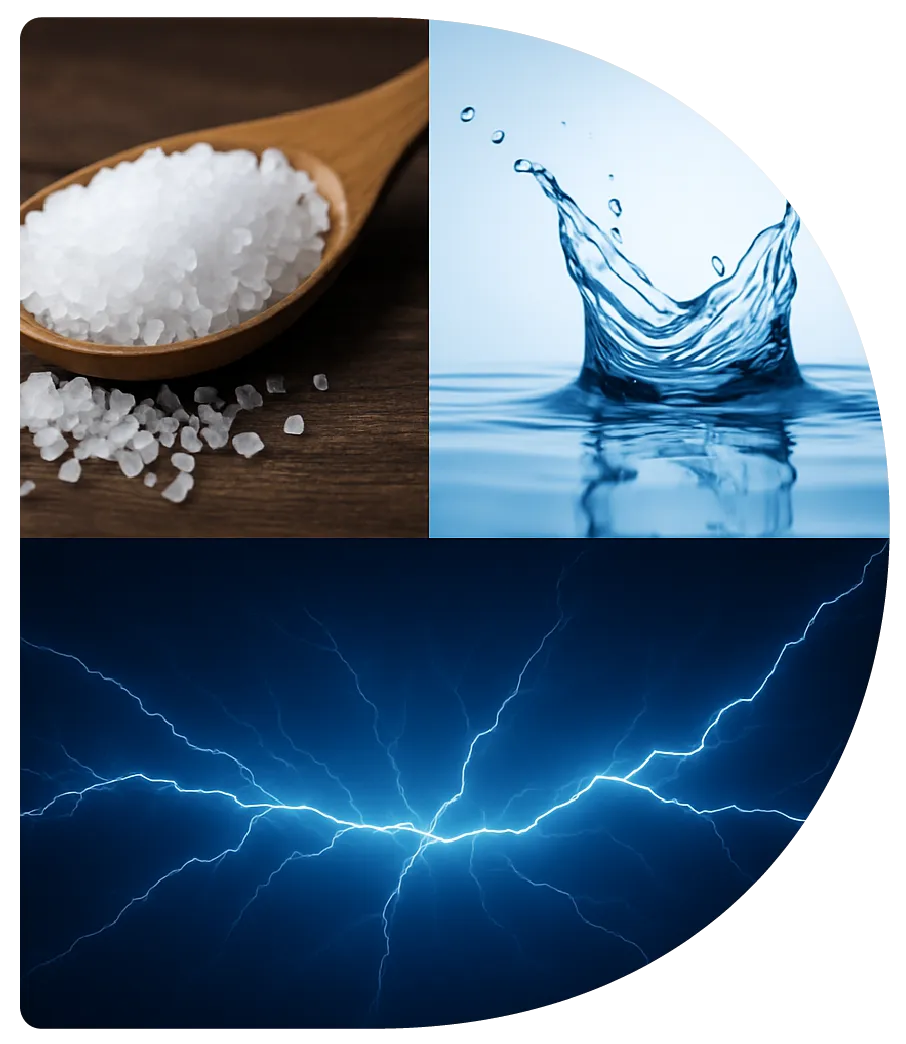
Hypochlorous acid: made from salt, water and electricity
Hypochlorous acid (HOCl) is the same molecule white blood cells make to fight germs. Our generators make it at a near-neutral pH, the range where HOCl is the main active form.
The same chemistry is behind Danolyte Disinfectant, our EPA-registered (Reg. No. 91582-1), hospital-grade disinfectant, made every weekday in Overland Park, Kansas.

The science of electrolysis
One system, two solutions
Filtered water, salt and electricity pass through an electrolytic cell with an ion-exchange membrane. One run gives you two products:
- Hypochlorous acid at pH 6.5 to 7.5, for disinfecting, sanitizing and deodorizing
- An alkaline solution above pH 10, for cleaning and degreasing
Clean first with the alkaline side, then disinfect with HOCl: one system for both jobs.
The economics
Where the savings come from
Ready-made disinfectant prices include production, packaging, freight and distributor markups. Make it on site and your cost per gallon comes down to five things:
Equipment
The generator itself, paid off over its working life, or leased.
Labor
Minutes a day: the system runs and monitors itself.
Water
Filtered tap water.
Electricity
Low-energy electrolysis on 110V or 220V.
Salt
Bags of pelletized salt, the only thing you restock.
The new standard
Just-in-time disinfecting, on three pillars

Effectiveness
Fresh hypochlorous acid at the strength you set, every day.
Economics
No product markups, freight or packaging in your cost per gallon.
Ecology
Salt, water and electricity in; saline solution after use. Far fewer jugs to buy, ship and throw away.

Engineered for autonomy
Set it, and it holds the numbers
- Proprietary logic controller keeps output consistent
- Fully automated, taking readings constantly
- Fail-safe: output diverts to waste automatically if pH or strength drifts
- No mixing errors: no manual dilution
- Smart maintenance: automatic email alerts when salt needs refilling

Efficiency by design
Built to run lean
- Energy optimization: runs on 110V or 220V, with energy-saving valves and less heat for longer component life
- Resource efficiency: our proprietary cell block uses less energy and salt per gallon
- Remote capability: full remote monitoring and troubleshooting, so less downtime and fewer service trips
Models
Which DJIT generator fits your facility?
| Model | HOCl per day | Alkaline cleaner per day | Best for |
|---|---|---|---|
| DJIT 300 | 85 gal | 21 gal | Small to medium facilities |
| DJIT 500 | 160 gal | 37 gal | Large facilities |
| DJIT 1000 | 325 gal | 74 gal | Industrial and pharmaceutical |
Adjustable pH from 4 to 9.5 and strength from 200 to 700 ppm. Rack, wall or dispenser mounting.
Why switch?
Buying jugs versus making your own
| Buying ready-made disinfectant | DJIT on-site generation | |
|---|---|---|
| Supply | Monthly orders, stock-outs and backorders | Made when you need it |
| Storage | Pallets of liquid in the warehouse | A few bags of salt |
| Freshness | Aging from the day it ships | Fresh every day |
| Waste | Empty jugs and freight | Breaks down into saline solution after use |
| Cost | Markups on every gallon | Upfront purchase or lease, then salt, water and power |

A partnership
We install it, train your team and stay with you
- Installation: professional setup and commissioning
- Training: hands-on operator training
- Support: remote monitoring and technical help
- Financing: 3-year lease and volume discounts
Versatility
Industries that make HOCl on site

Healthcare
Daily disinfecting of high-touch surfaces across a hospital or clinic network.
Pharmaceutical and biotech
Consistent, controlled chemistry with adjustable pH and strength.
Food service and processing
HOCl for sanitizing plus an alkaline solution for degreasing, from one system.
Agriculture
Poultry and livestock operations that want supply on the farm. See poultry biosecurity.
Schools and facilities
Districts and campuses that go through drums every month.
Making disinfectant on site for use as a registered pesticide has EPA requirements. We'll walk you through what applies to your facility.

Start the conversation
Ready to make your own?
Tell us about your facility and how much you use today. We'll recommend a model, show you the numbers and plan the install.
Danolyte Disinfectant
CONTAINS NO
- Fragrance
- Dyes
- Alcohol
- Phenols
- VOCs
- Phosphates
What's left when Danolyte is done is saline solution, not a film of perfume or a chemical smell. It's low odor, non-flammable and leaves no harmful or harsh chemical residue.
Frequently asked questions
How does an on-site HOCl generator work?
A weak salt brine passes through an electrolytic cell with an ion-exchange membrane. Electricity turns it into two solutions: hypochlorous acid at a near-neutral pH for disinfecting, sanitizing and deodorizing, and an alkaline solution for cleaning and degreasing.
How much HOCl do DJIT generators make?
The DJIT 300 makes 85 gallons a day, the DJIT 500 makes 160 gallons a day, and the DJIT 1000 makes 325 gallons a day, each with adjustable pH from 4 to 9.5 and strength from 200 to 700 ppm.
What does it take to run a generator?
Filtered water, pelletized salt and electricity on 110V or 220V. The controller monitors output automatically, diverts it to waste if it drifts, and emails you when salt needs refilling.
Can we lease a generator?
Yes. Danolyte Global offers a 3-year lease and volume discounts, plus installation, operator training and remote support.
Who builds Danolyte generators?
Danolyte Global, a family business in Overland Park, Kansas, that has designed and built its own HOCl generators since 2015 and makes EPA-registered Danolyte Disinfectant on them.
Is on-site HOCl the same as Danolyte Disinfectant?
Danolyte Disinfectant (EPA Reg. No. 91582-1) is made at our registered establishment and sold under its EPA label. Solution you make on site uses the same chemistry; we'll help you understand the EPA requirements that apply to how you use it.
Generator output, models and features are company specifications. Danolyte Disinfectant claims are on its EPA label; see the Danolyte Disinfectant Label Guide.