Hypochlorous acid, explained · EPA Reg. No. 91582-1
What is hypochlorous acid (HOCl)?
It's the molecule your own body makes to fight germs. We make it from salt, water and electricity, register it with the EPA, and bottle it fresh as Danolyte: one gentle bottle that does the work of a whole cabinet.
Hypochlorous acid in 30 seconds
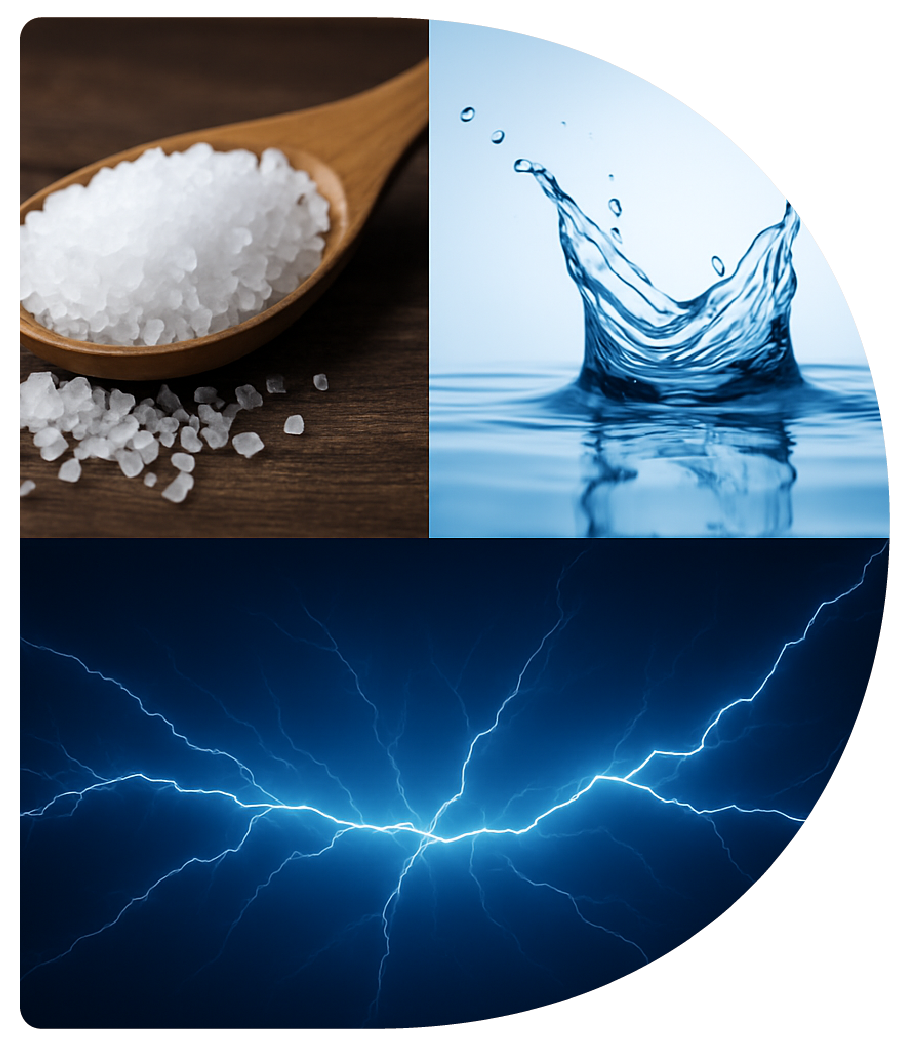
Hypochlorous acid (HOCl) is a weak acid that white blood cells produce to destroy invading germs. It can also be made outside the body by running a low electric current through salt water, a process called electrolysis. At a near-neutral pH, HOCl is the main active form of the chlorine in the solution. Danolyte Disinfectant is an EPA-registered (Reg. No. 91582-1), hospital-grade HOCl disinfectant made this way at pH 6.5. It kills 99.9% of bacteria in 2 minutes, has no fragrance, dyes, alcohol or VOCs, and breaks down into saline solution after it works.
Your body's own disinfectant
Your immune system already trusts it
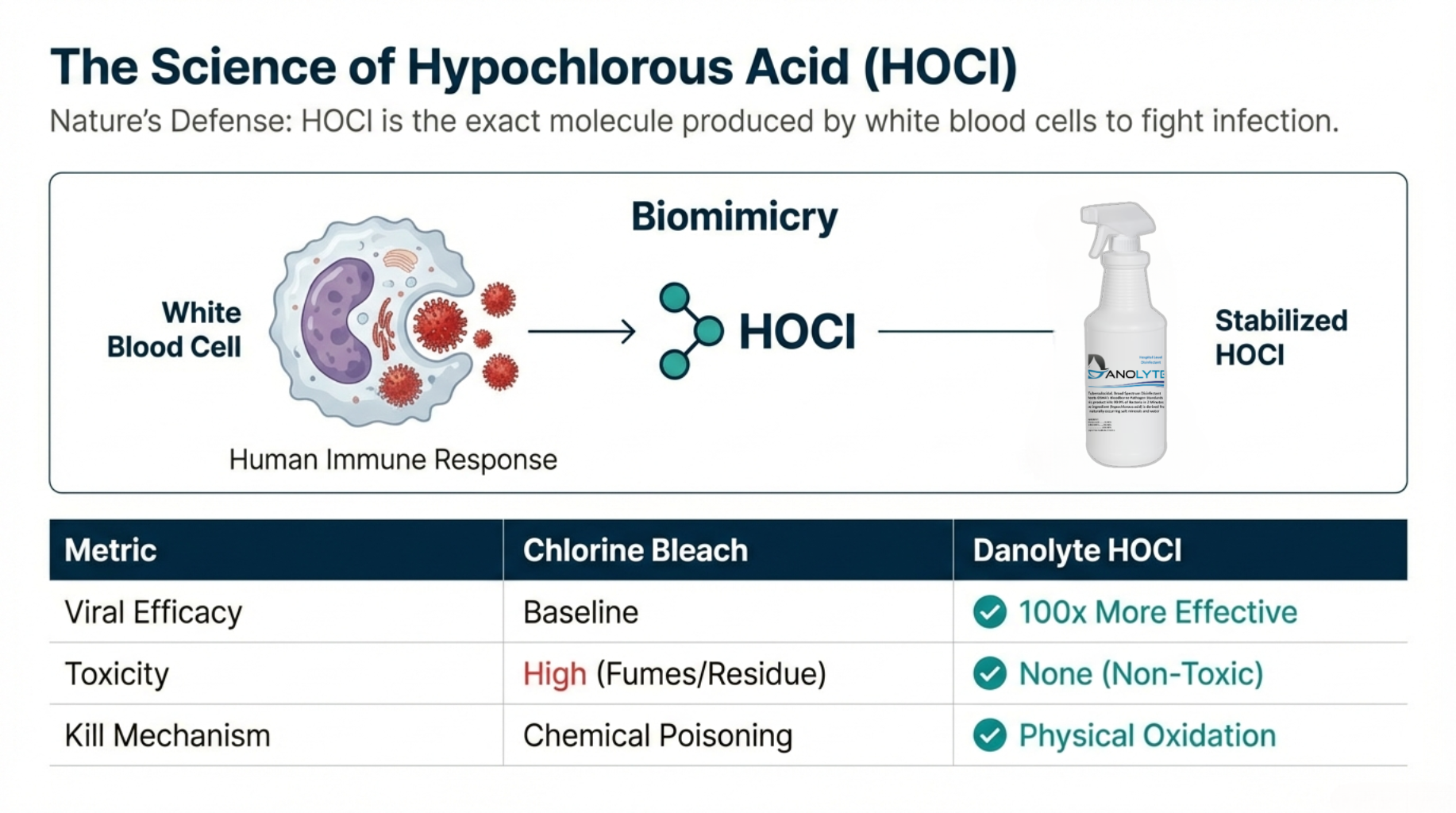
When germs get into your body, white blood cells called neutrophils surround them and use an enzyme, myeloperoxidase, to make hypochlorous acid. It's one of the main ways your immune system kills bacteria.
That's what makes HOCl different from almost everything else under the sink. It isn't a man-made compound your family has to get used to. It's a molecule the human body has relied on all along, now made outside the body, at a strength registered to disinfect your home.
Nearly 200 years of HOCl
Hypochlorous acid isn't new. Making it fresh, gentle and registered is.
- 1834DiscoveredFrench chemist Antoine-Jérôme Balard first prepares hypochlorous acid.
- 1800sMade with electricityMichael Faraday's work on electrolysis shows chlorine chemistry can be made from salt and water.
- 1915On the front linesDuring World War I, chlorine solutions containing HOCl become a standard way to clean wounds.
- 1970sElectrolyzed waterElectro-chemical activation (ECA) makes it practical to produce HOCl, often called anolyte, on demand.
- 2015Our family starts buildingDanolyte Global begins designing and building its own HOCl generators in Overland Park, Kansas.
- TodayEPA-registeredDanolyte Disinfectant, EPA Reg. No. 91582-1, made fresh every weekday and shipped the day it's made.
How it's made
How is hypochlorous acid made?
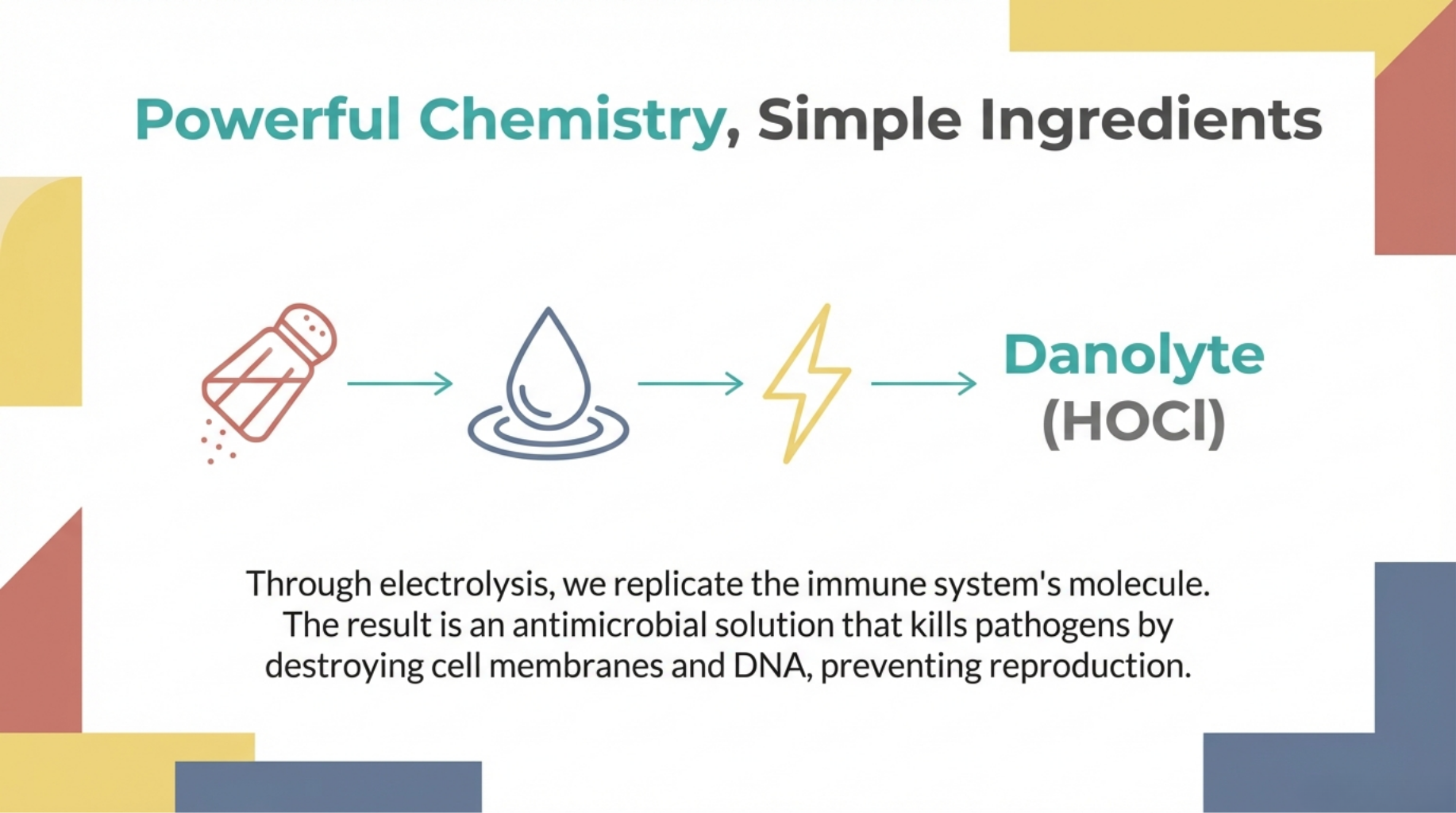
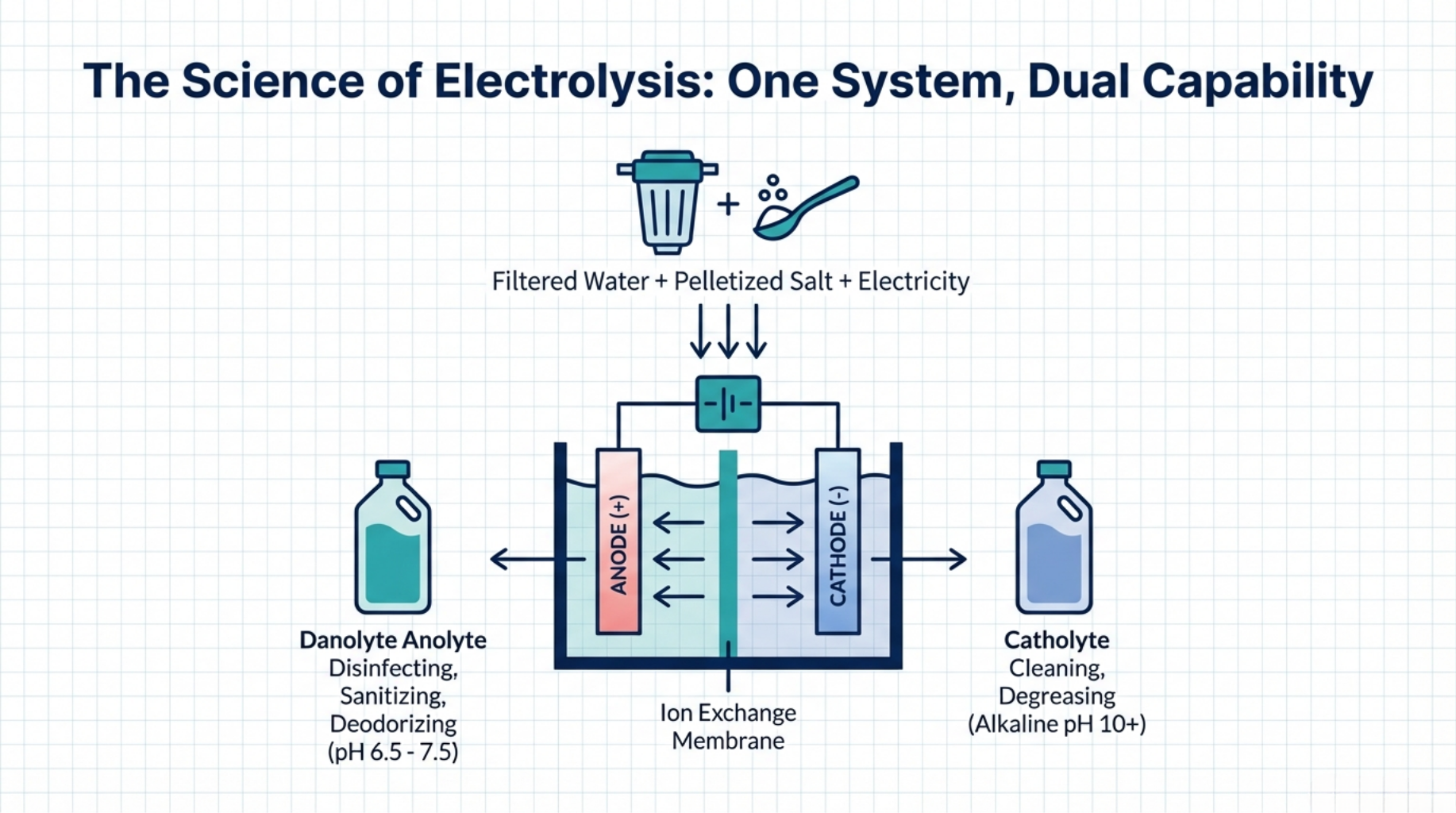
Three ingredients, one step:
- SaltA weak brine made from naturally occurring salt minerals.
- WaterFiltered water.
- ElectricityA low-energy current through an electrolytic cell turns the brine into hypochlorous acid. Chemists call this electro-chemical activation, or ECA.
No fragrance, dyes, alcohol, phenols or VOCs go in, so none come out.
Anolyte, explained
What is anolyte, and is it the same as hypochlorous acid?
Anolyte is the name for the solution that forms on the anode (positive) side of an electrolytic cell. Made at a near-neutral pH, its main active ingredient is hypochlorous acid, so anolyte water, electrolyzed water and HOCl usually mean the same family of solutions.
The difference that matters is quality. Anolyte made at the wrong pH, at an unknown strength, or stored too long is not the same as anolyte made to a registered specification. Danolyte is anolyte made to its EPA-registered specification: pH 6.5 and at least 500 ppm free available chlorine at production.
Why pH matters
Why is Danolyte made at pH 6.5?
Chlorine in water exists in two main forms, and pH decides the balance. At a lower, near-neutral pH, most of it is hypochlorous acid (HOCl), the most active germ-killing form. As pH rises, more of it turns into the hypochlorite ion (OCl⁻).
That's why we produce Danolyte at pH 6.5: the range where HOCl does most of the work.
Share of free chlorine present as HOCl at 25°C, from the USDA's hypochlorous acid technical report. The pH 6.5 value is estimated between the report's pH 6.0 and 7.0 figures.
One molecule, a dozen jobs
The multi-tool of disinfectants
Most homes keep a different bottle for every job, each with its own warning label. Hypochlorous acid is the rare molecule that can do nearly all of them. Here's everything the Danolyte label lets one bottle do.
Registered vs. unregistered
Is all hypochlorous acid EPA-registered?
No. HOCl has become popular, and many sprays are sold without an EPA registration. Without one, a product can't legally claim to kill germs, and nobody has checked that it does.
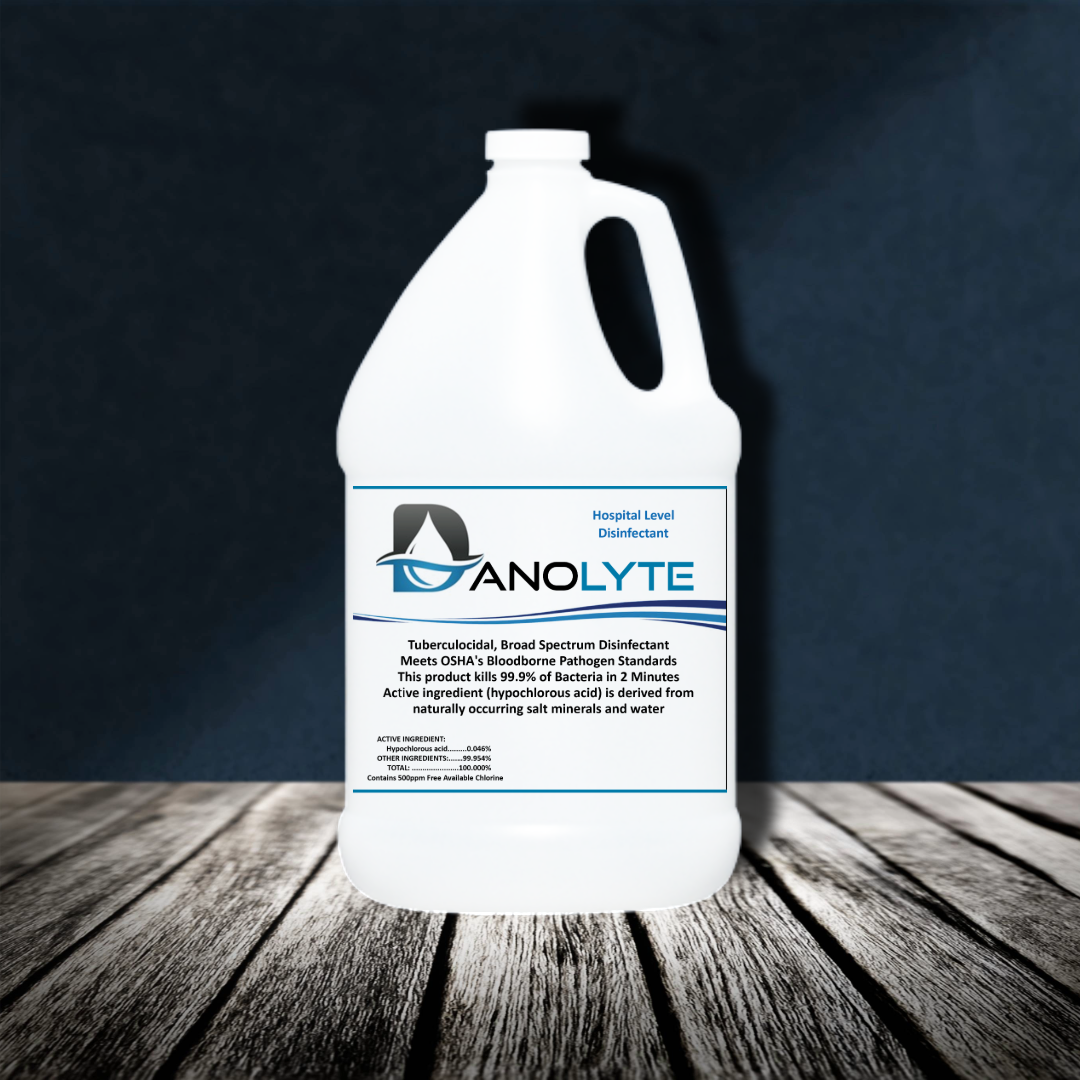
A registered disinfectant has proven to the EPA that it kills the organisms on its label, and its registration number is printed on every container. Danolyte Disinfectant is EPA Reg. No. 91582-1, made at EPA Est. No. 91582-KS-1. Look both up yourself.
- Hospital grade: tested to the AOAC germicidal spray method for hospital disinfectants
- Tuberculocidal: kills the bacteria that cause tuberculosis*
- Veterinarian grade: kills canine parvovirus*
Why fresh matters
Why does hypochlorous acid need to be fresh?
HOCl is a molecule that's always on the move. It naturally breaks down over time, which is part of why it leaves nothing harsh behind. It also means a bottle that sat in a warehouse for months isn't the same as one made this week.
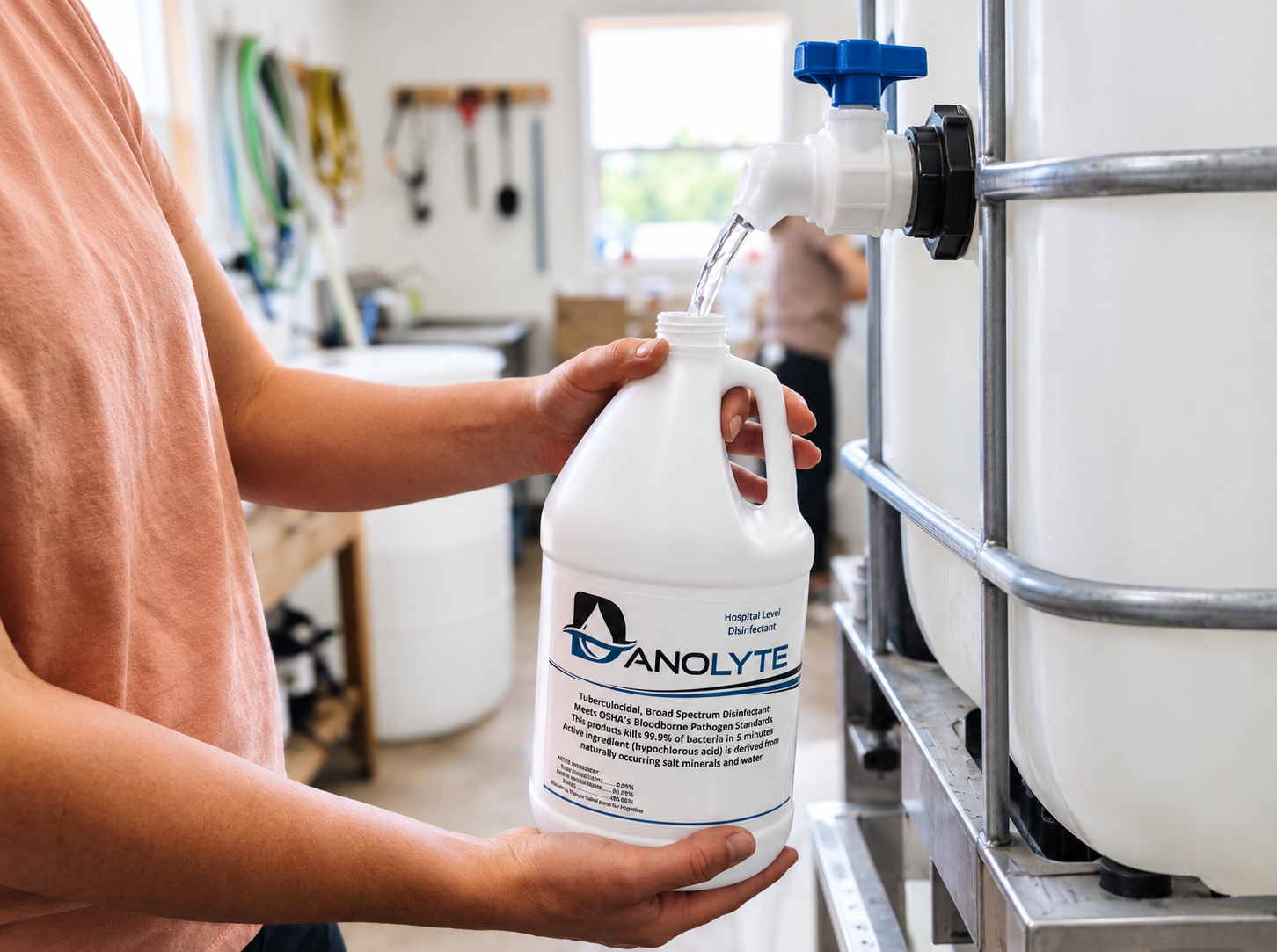
So we don't warehouse it. Our family makes Danolyte every weekday in Overland Park, Kansas, on generators we've designed and built since 2015, and ships it the day it's made. Every container shows its production date.
Gentle strength
Hospital strength. Nursery gentle.
You shouldn't have to choose between a home that's truly disinfected and one free of harsh chemicals. With hypochlorous acid, you don't. Danolyte is hospital grade and, in the label's own words, gentle enough for use in nurseries.
It's low odor, non-flammable, not harmful to septic systems, and it breaks down into saline solution after it works. Your home, your rules, your disinfectant.

Made by the people who build the generators
Put your body's own disinfectant to work at home
Order Danolyte in quarts, gallons, 5-gallon pails, drums and totes, made fresh and shipped the day it's made. Questions? Email [email protected] and you'll hear from the family that makes it.
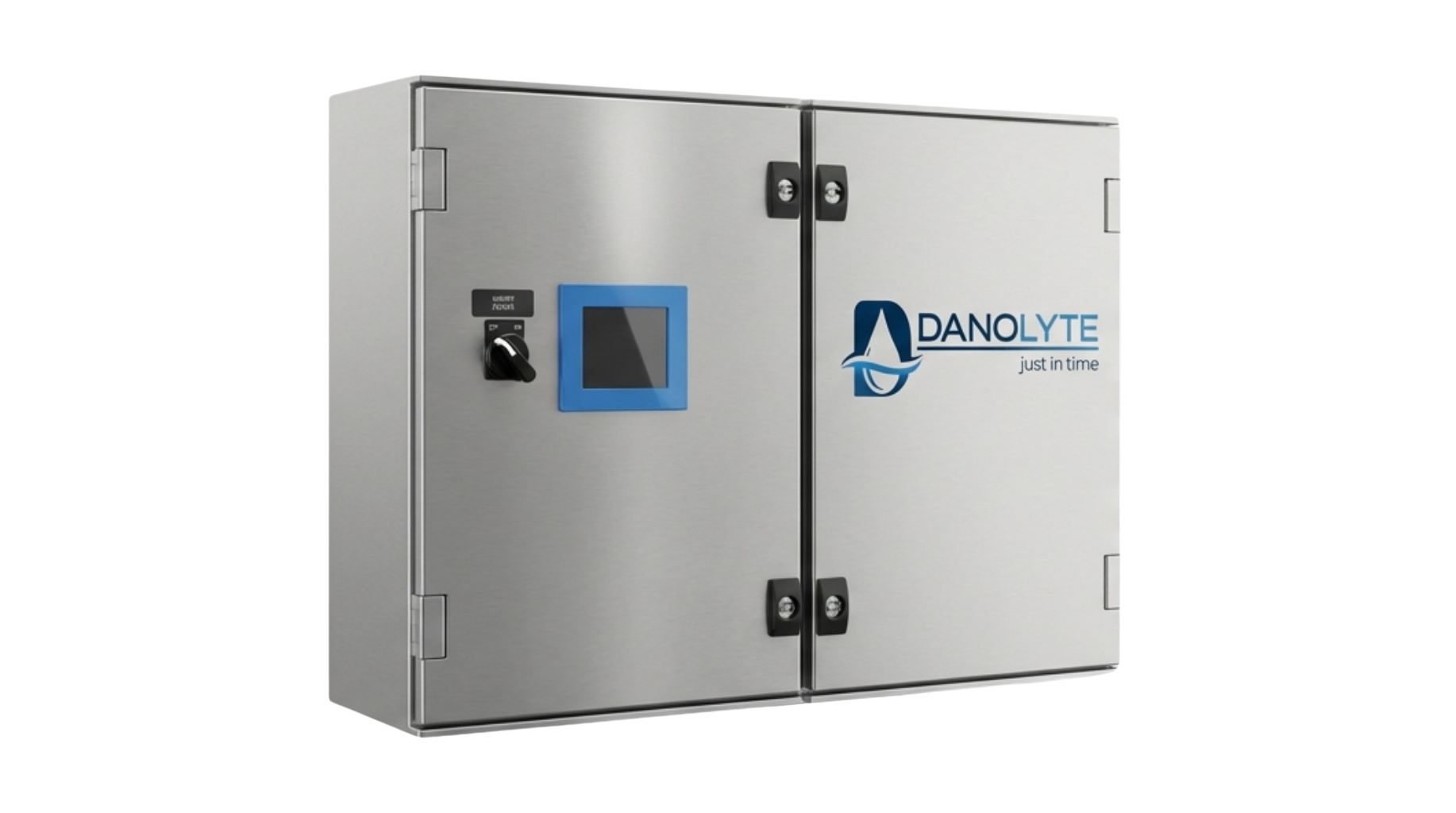
Danolyte Disinfectant
CONTAINS NO
- Fragrance
- Dyes
- Alcohol
- Phenols
- VOCs
- Phosphates
What's left when Danolyte is done is saline solution, not a film of perfume or a chemical smell. It's low odor, non-flammable and leaves no harmful or harsh chemical residue.
Frequently asked questions
What is hypochlorous acid?
Hypochlorous acid (HOCl) is a weak acid that white blood cells make to fight germs. It can also be made by electrolysis of salt water. Danolyte Disinfectant is an EPA-registered HOCl disinfectant (Reg. No. 91582-1).
Is hypochlorous acid natural?
The HOCl molecule is made naturally by the human immune system. Danolyte's active ingredient is derived from naturally occurring salt minerals and water, made with electricity.
What is anolyte?
Anolyte is the solution made on the anode side of an electrolytic cell. Made at a near-neutral pH, its main active ingredient is hypochlorous acid. Danolyte is anolyte made to an EPA-registered specification.
Is hypochlorous acid the same as bleach?
No. Household bleach is sodium hypochlorite, a different chemical kept at a high, alkaline pH. Hypochlorous acid is the form of chlorine that dominates at a near-neutral pH. Danolyte is made at pH 6.5 and has no fragrance, dyes, alcohol, phenols or VOCs.
What can hypochlorous acid be used for?
Danolyte's label covers disinfecting and sanitizing hard surfaces, food-contact surfaces with no rinse, deodorizing, breaking down allergens on hard surfaces, cleaning stains, sanitizing items that go in mouths, electronics, pet areas, and use as an alcohol-free hand antiseptic that meets the FDA Food Code.
Is all hypochlorous acid EPA-registered?
No. Many HOCl products are not registered and can't legally claim to kill germs. Look for an EPA registration number on the label; Danolyte's is 91582-1.
Why does hypochlorous acid need to be fresh?
HOCl naturally breaks down over time. That's why Danolyte is made every weekday and shipped the day it's made, with the production date on every container.
What pH is hypochlorous acid?
HOCl is the main form of free chlorine at a near-neutral pH, and the share drops as pH rises above about 7.5. Danolyte is produced at pH 6.5.
*Germ claims apply to hard, non-porous surfaces when used as directed. See the Danolyte Disinfectant Label Guide. History and chemistry facts describe hypochlorous acid in general; Danolyte's own uses are the ones on its EPA label.