
Flu season briefing for facilities · EPA Reg. No. 91582-1
Navigating the 2026 flu season: a surface disinfection guide for schools, offices and care facilities
When flu moves through a building, it moves through the things people touch. Here's what last season taught us, what the label says Danolyte kills, and a simple daily routine for the surfaces that matter most.

What disinfectant kills flu virus on surfaces?
Danolyte Disinfectant is an EPA-registered (Reg. No. 91582-1), hospital-grade hypochlorous acid disinfectant whose label lists influenza A (H1N1), including Pandemic 2009 H1N1, plus RSV, rhinovirus and adenovirus.* It's ready to use straight from the bottle, kills influenza A strain A/Virginia in 2 minutes* and kills 99.9% of bacteria in 2 minutes, with no fragrance, dyes, alcohol or VOCs and no harsh chemical residue left behind.

Executive summary
Why last season changed the plan
The 2025-26 season arrived early and hit hard, driven by a mutated influenza A strain. Cases climbed quickly, hospitals filled, and early estimates put vaccine effectiveness well below a typical year.
The takeaway for facility leaders: plan for two layers. People follow their doctor's advice on vaccines and treatment, and the building does its part by keeping high-touch surfaces disinfected every day.

The scale of the surge
How big was the 2025-26 flu surge?
The figures on this slide were reported in late January 2026, before that season's peak: more than 15 million illnesses, about 180,000 hospitalizations and 7,400 deaths, including 17 children. At some benchmark hospitals, flu admissions ran about ten times higher than COVID-19 and RSV combined.
For this year's numbers, check the CDC's weekly FluView report.

Identifying the strain
What is H3N2 subclade K?
Most of last season's cases came from influenza A (H3N2) subclade K. It's a mutated flu, not a "super flu": several changes made it different from the strain the vaccine was built around, so it spread easily even among people with some prior immunity.

The vaccine layer
Why one layer of protection isn't enough
Think of protection as slices of Swiss cheese: each layer has holes, and stacking them is what works. Early estimates put last season's vaccine effectiveness around 30 to 40%, compared with 60 to 65% in a typical year. Health officials still recommend the vaccine, because it reduces how severe illness gets.
Clean surfaces are another slice. They don't replace anything your doctor recommends; they add a layer the building controls.

Know the signs
How do you tell flu from a cold?
Flu usually starts suddenly: high fever, chills, heavy fatigue and body aches. Children may also have stomach symptoms. A fever that goes away and then comes back is a reason to call a doctor right away.
General information, not medical advice. Talk to a healthcare provider about symptoms and treatment.

Where flu spreads
How long does flu live on surfaces?
Flu virus can survive on hard surfaces for hours, long enough to pass from one hand to the next on a door handle, a phone or a shared desk. That's why the surfaces people touch most are where disinfecting matters most:
- Door handles, push bars and light switches
- Phones, keyboards and shared devices
- Desks, counters and cafeteria tables
- Elevator buttons, hand railings and restroom fixtures
Closing the gap
Hospital-grade surface disinfection, straight from the label
Danolyte is broad-spectrum and tuberculocidal. Used as directed on hard, non-porous surfaces, the label says it kills:*

- Influenza A (H1N1)
- Pandemic 2009 H1N1
- RSV
- Rhinovirus
- Adenovirus
- Norovirus
- Rotavirus
- MRSA
- Staph
- E. coli
- Salmonella
- C. diff spores
2 minutes for influenza A
Keep surfaces wet 2 minutes for influenza A (H1N1) strain A/Virginia and Staph, and 10 minutes for the other organisms on the label.
Ready to use
500 ppm, straight from the bottle. No mixing, no measuring and no dilution mistakes.
Hospital grade
Tested to the AOAC germicidal spray method for hospital disinfectants.
The science
What is hypochlorous acid?
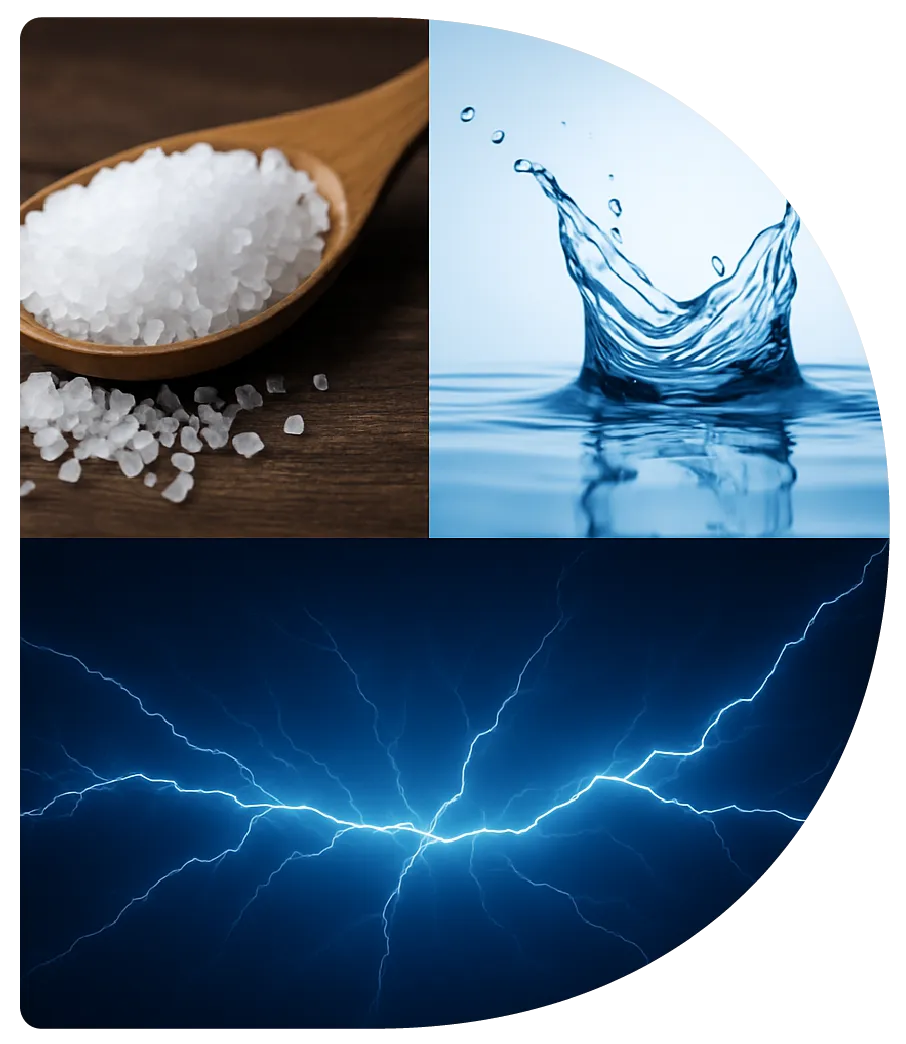
Hypochlorous acid (HOCl) is the same molecule white blood cells make to fight off germs. We make it from three things: salt, water and electricity, on generators our family has designed and built since 2015.
The result is a hospital-grade disinfectant with no fragrance, no dyes, no alcohol, no phenols and no VOCs. After it works, it breaks down into saline solution, so there's no harsh chemical residue on desks, keyboards or counters.

A straight answer
Does Danolyte kill H3N2 subclade K?
No disinfectant label lists subclade K by name, including ours, and we only make the claims on our EPA label. Danolyte's label lists influenza A (H1N1), including Pandemic 2009 H1N1, along with RSV, rhinovirus and adenovirus.* What any facility can do is keep the surfaces people share disinfected every day, so fewer germs move from hand to hand.
Operational advantage
Disinfect every day without closing the building

No fragrance, low odor
No perfume and no harsh chemical smell in classrooms, offices or break rooms. The smell of clean.
No VOCs
No alcohol, phenols or VOCs, and a non-flammable formula on the cart and in storage.
No rinse on most surfaces
Spray, keep wet, air dry. For food-contact surfaces, sanitize at 1 part Danolyte to 1.5 parts water with no rinse needed.
One product, four jobs
Cleans, deodorizes, sanitizes and disinfects, so staff carry one bottle.
Protocol
A three-layer daily surface routine

- High-touch, every daySpray or wipe door handles, light switches, phones and keyboards daily, and more often when illness is going around.
- Shared spacesMop or spray hard floors, tables and equipment in gyms, lobbies, classrooms and break rooms. Danolyte is labeled for schools, offices, gyms and locker rooms.
- Where people eatSanitize cafeteria tables and food-contact surfaces at 1 part Danolyte to 1.5 parts water: let stand 60 seconds, no rinse required.

The clinical window
Why the first 48 hours matter
Flu antivirals work best when they're started within about 48 hours of the first symptoms, so a sudden fever is a reason to call a doctor promptly and ask about testing. Your doctor will decide which treatment fits.
General information, not medical advice.
Summary checklist
Fierce season, fiercer defense
Biological
Follow public health guidance on flu vaccines.
Behavioral
Wash hands often, cover coughs and stay home when sick.
Environmental
Disinfect high-touch hard surfaces daily with Danolyte, ready to use.
Clinical
Call a doctor quickly about a sudden fever.

Equip your facility
When people's defenses are down, the building's has to hold
Don't count on luck. Put hospital-grade surface disinfection in place now, in gallons, 5-gallon pails, drums or totes, made fresh every weekday and shipped the day it's made.
Danolyte Disinfectant
CONTAINS NO
- Fragrance
- Dyes
- Alcohol
- Phenols
- VOCs
- Phosphates
What's left when Danolyte is done is saline solution, not a film of perfume or a chemical smell. It's low odor, non-flammable and leaves no harmful or harsh chemical residue.
Frequently asked questions
Does Danolyte kill the flu virus?
Danolyte's EPA label (Reg. No. 91582-1) lists influenza A (H1N1), including Pandemic 2009 H1N1, on hard, non-porous surfaces when used as directed. Keep the surface wet for 2 minutes for strain A/Virginia, then let it air dry.
Does Danolyte kill H3N2 subclade K?
Subclade K isn't listed by name on any disinfectant label, including Danolyte's. We only make the claims on our EPA label, which lists influenza A (H1N1), RSV, rhinovirus and adenovirus on hard, non-porous surfaces.
How long does flu virus live on surfaces?
Flu virus can survive on hard surfaces for hours, which is why daily disinfecting of door handles, phones, desks and counters matters during flu season.
Where should facilities disinfect during flu season?
Focus on high-touch hard surfaces: door handles, light switches, phones, keyboards, desks, cafeteria tables, elevator buttons, hand railings and restroom fixtures. Danolyte is labeled for schools, offices, gyms, daycares and healthcare settings.
Do you have to rinse Danolyte?
Most surfaces need no rinse: spray, keep wet and let air dry. For food-contact surfaces, sanitize at 1 part Danolyte to 1.5 parts water with no rinse required, or rinse with drinking water after disinfecting at full strength.
Does Danolyte have a strong smell?
No. Danolyte has no added fragrance and is low odor. It contains no alcohol, phenols or VOCs.
*Germ claims apply to hard, non-porous surfaces when used as directed. See the Danolyte Disinfectant Label Guide. Season figures on this page were reported in late January 2026 for the 2025-26 season.