EPA-Registered Disinfectant

Food-Contact Friendly

Fast Shipping + Real Support
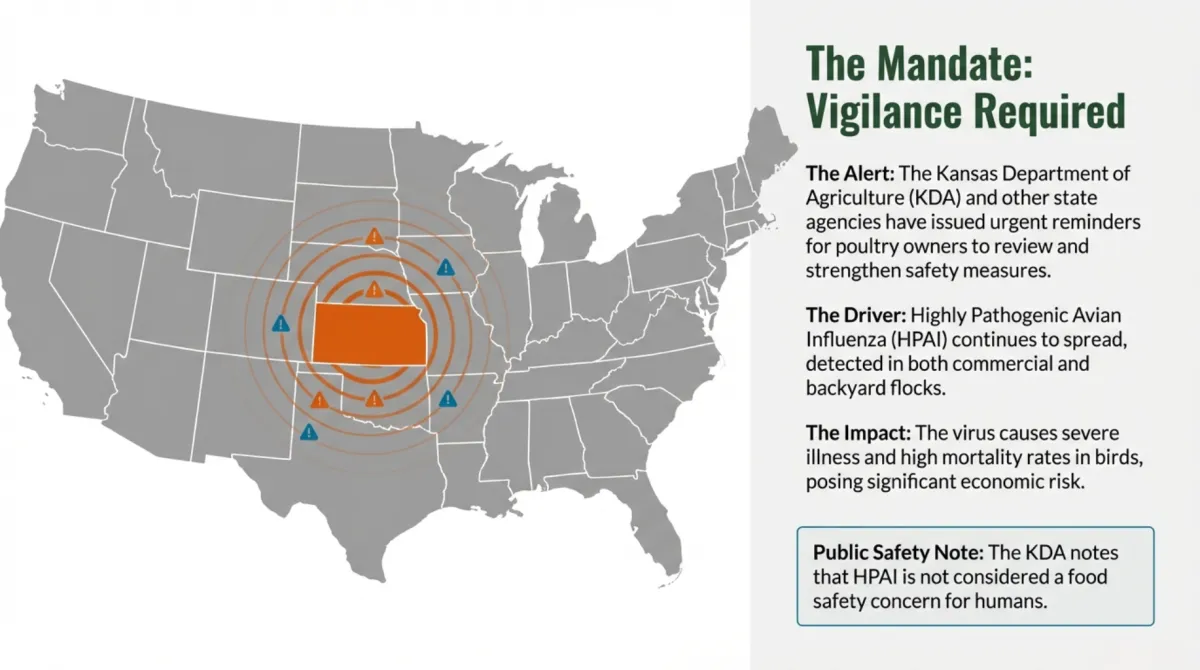
alt="The Mandate: Vigilance Required — Kansas Department of Agriculture (KDA) and state agencies urge poultry owners to review and strengthen safety measures; HPAI continues to spread in commercial and backyard flocks; severe illness and high mortality in birds create significant economic risk; public safety note: KDA says HPAI is not considered a food safety concern for humans"
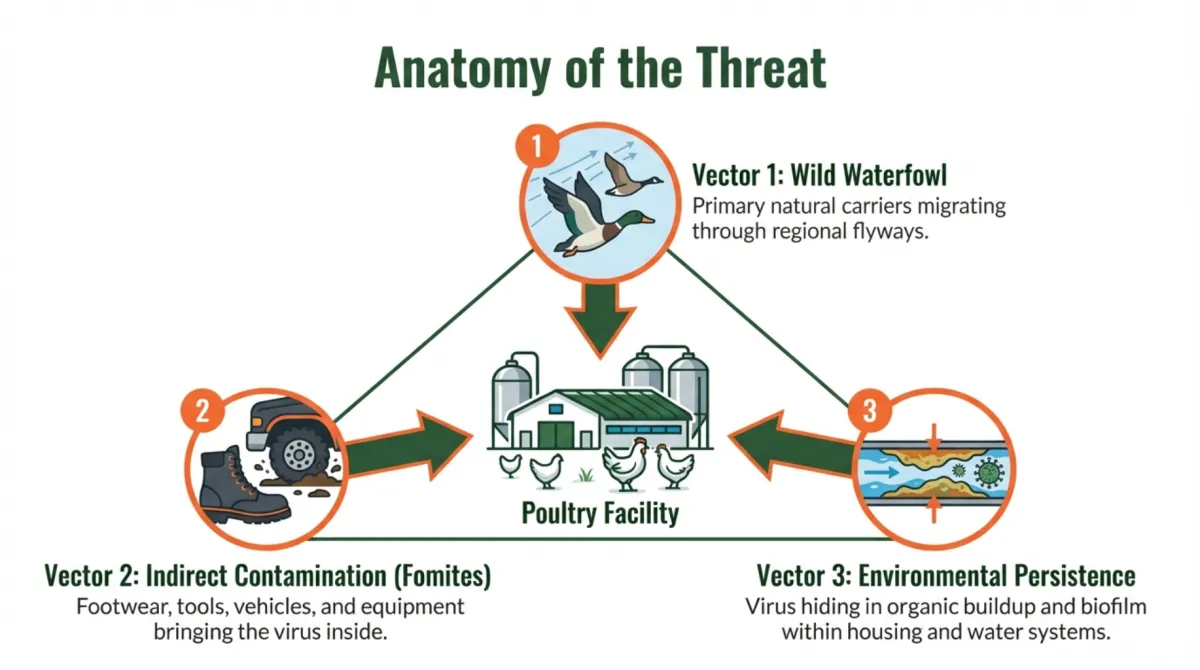
alt="Anatomy of the Threat — HPAI pathways into a poultry facility: Vector 1 wild waterfowl as primary natural carriers migrating through regional flyways; Vector 2 indirect contamination (fomites) from footwear, tools, vehicles, and equipment bringing virus inside; Vector 3 environmental persistence with virus hiding in organic buildup and biofilm within housing and water systems"
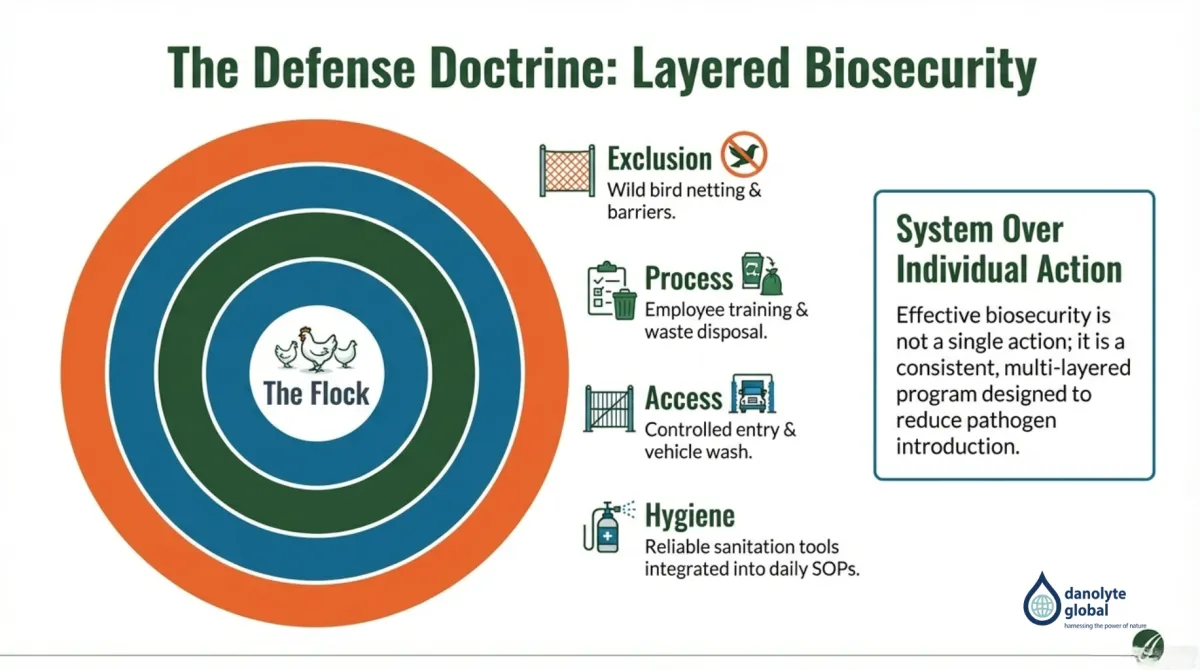
alt="The Defense Doctrine: Layered Biosecurity — System Over Individual Action; effective biosecurity is consistent and multi-layered to reduce pathogen introduction: Exclusion (wild bird netting and barriers), Process (employee training and waste disposal), Access (controlled entry and vehicle wash), Hygiene (reliable sanitation tools integrated into daily SOPs) to protect the flock"
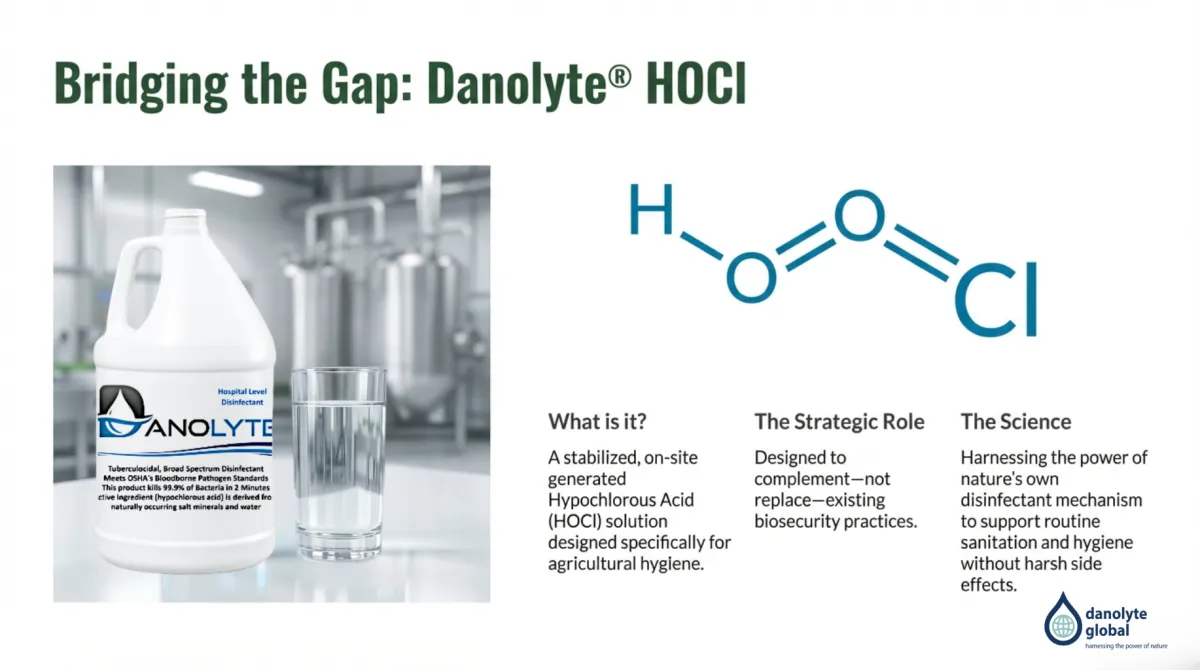
alt="Bridging the Gap: Danolyte HOCl — stabilized on-site generated hypochlorous acid solution designed for agricultural hygiene; strategic role complements—not replaces—existing biosecurity practices; science harnesses nature’s disinfectant mechanism to support routine sanitation and hygiene without harsh side effects (HOCl chemical structure shown)"
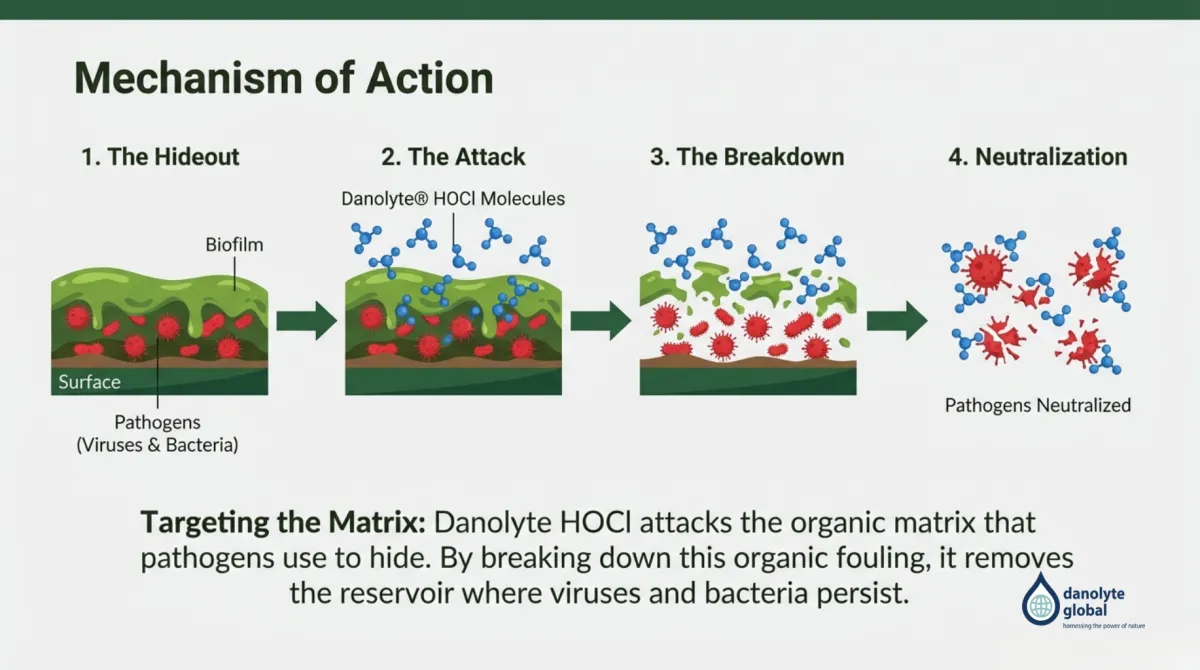
alt="Mechanism of Action — 1 The Hideout: pathogens (viruses and bacteria) protected by biofilm on surfaces; 2 The Attack: Danolyte HOCl molecules penetrate the matrix; 3 The Breakdown: organic fouling and biofilm are broken apart; 4 Neutralization: pathogens neutralized; targeting the matrix removes the reservoir where viruses and bacteria persist"
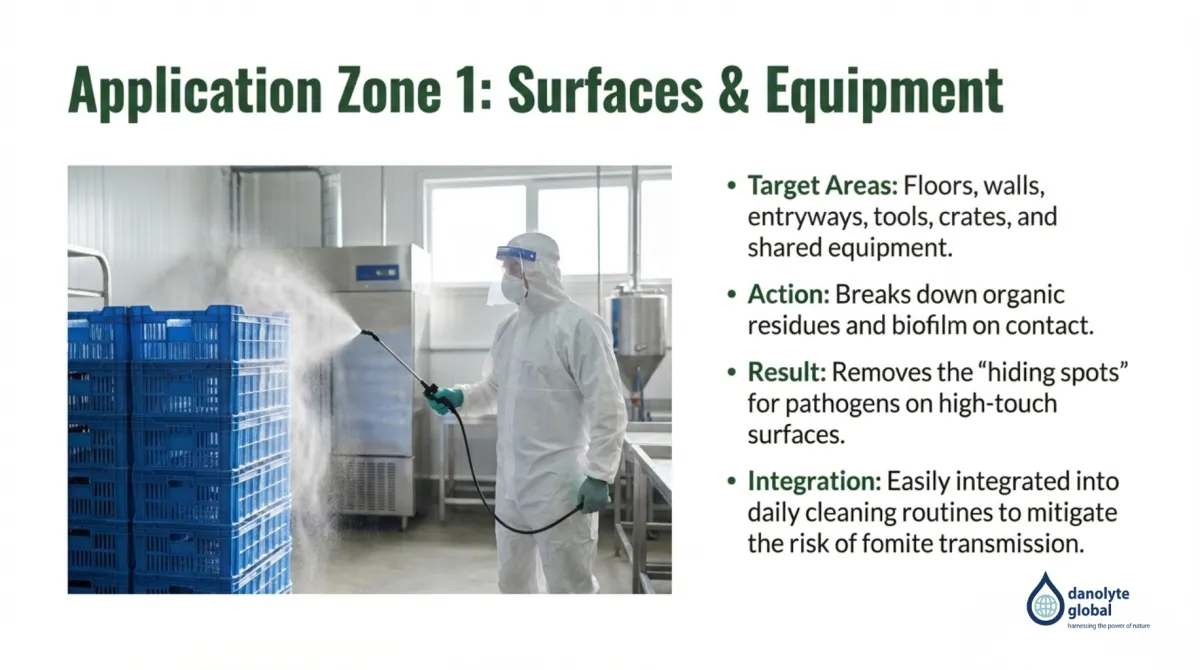
alt="Application Zone 1: Surfaces and Equipment — target areas include floors, walls, entryways, tools, crates, and shared equipment; action breaks down organic residues and biofilm on contact; result removes pathogen hiding spots on high-touch surfaces; integration fits daily cleaning routines to mitigate risk of fomite transmission"
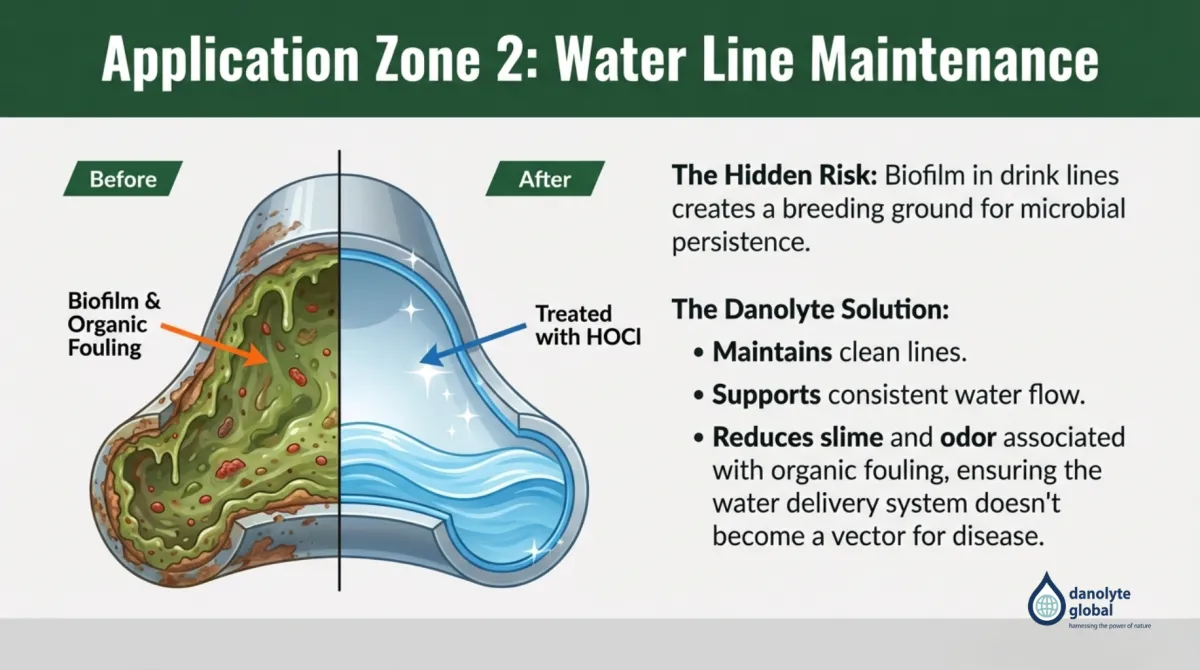
alt="Application Zone 2: Water Line Maintenance — hidden risk: biofilm in drink lines creates a breeding ground for microbial persistence; before shows biofilm and organic fouling, after shows treated with HOCl; Danolyte solution maintains clean lines, supports consistent water flow, and reduces slime and odor so the water delivery system does not become a vector for disease"
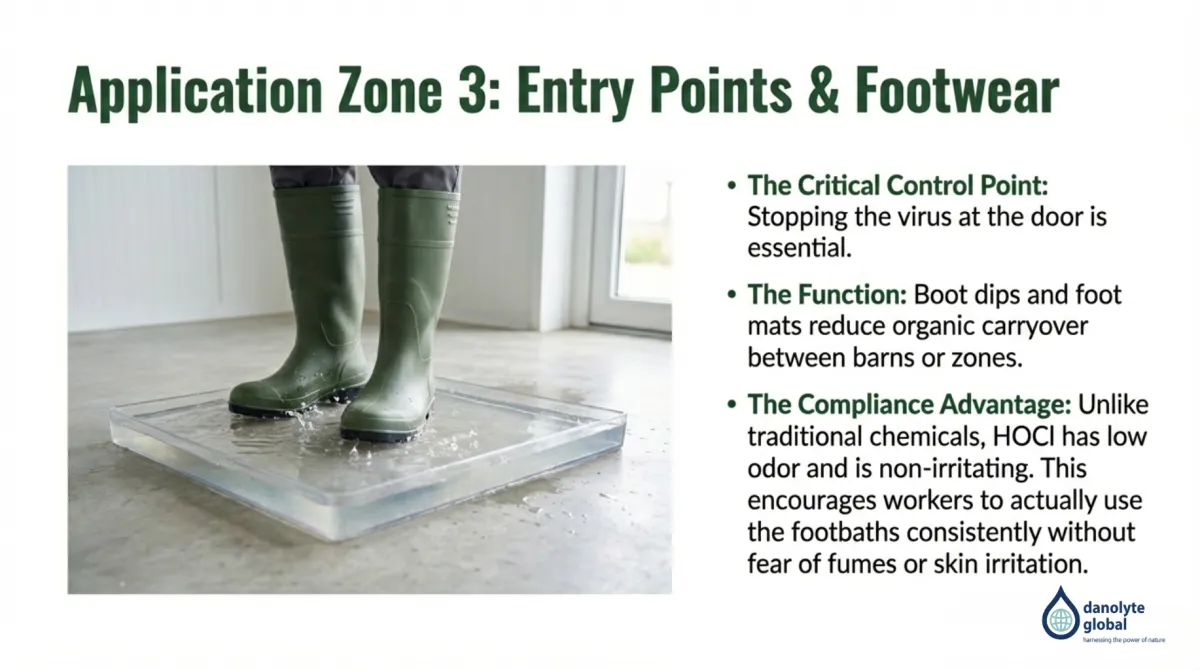
alt="Application Zone 3: Entry Points and Footwear — critical control point is stopping the virus at the door; boot dips and foot mats reduce organic carryover between barns/zones; compliance advantage: HOCl has low odor and is non-irritating, encouraging consistent use of footbaths without fear of fumes or skin irritation"
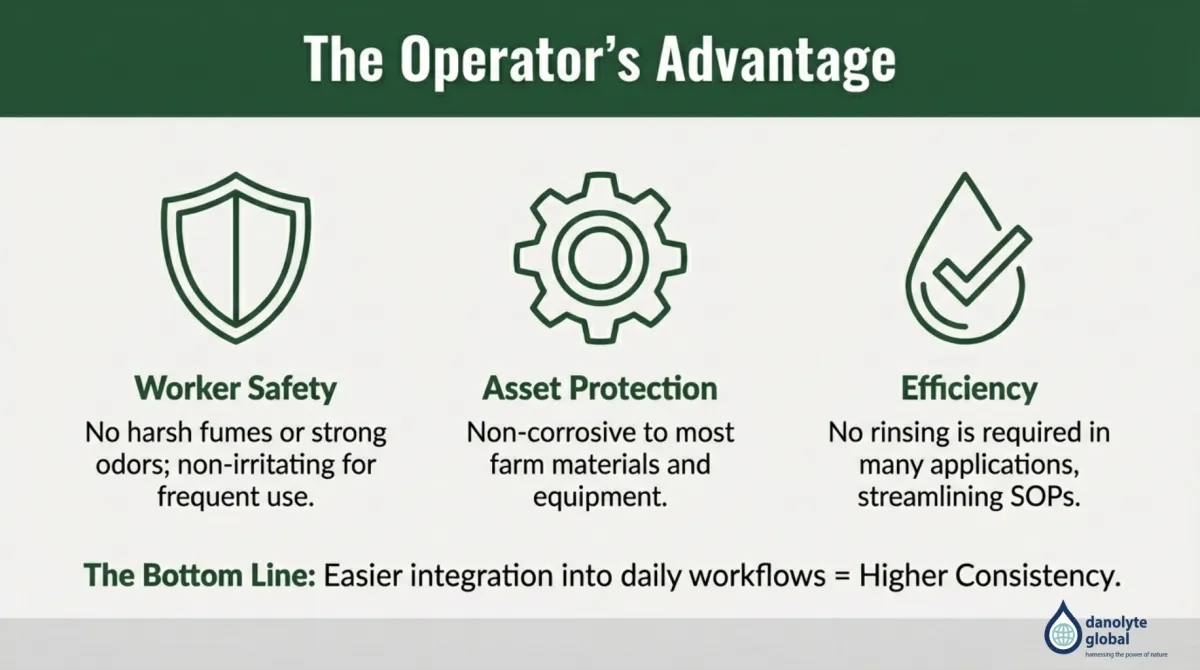
alt="The Operator’s Advantage — Worker Safety: no harsh fumes or strong odors, non-irritating for frequent use; Asset Protection: non-corrosive to most farm materials and equipment; Efficiency: no rinsing required in many applications, streamlining SOPs; bottom line: easier integration into daily workflows equals higher consistency"
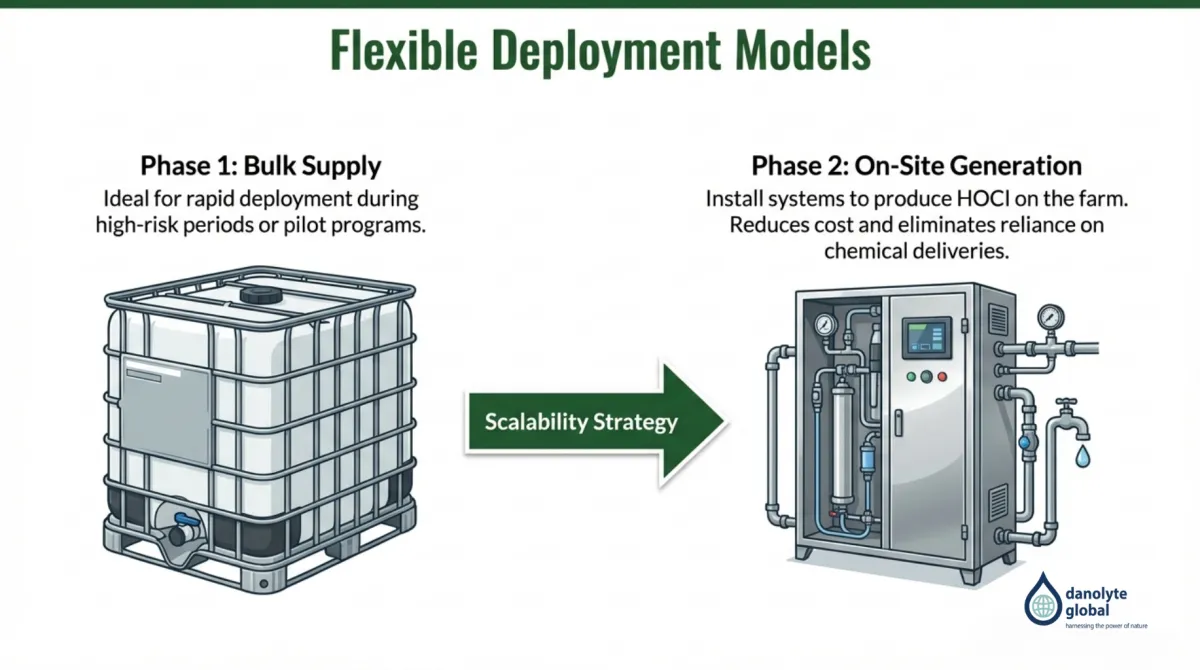
alt="Flexible Deployment Models — Phase 1 Bulk Supply for rapid deployment during high-risk periods or pilot programs; Phase 2 On-Site Generation installs systems to produce HOCl on the farm, reducing cost and eliminating reliance on chemical deliveries; scalability strategy from tote supply to generator-based production"
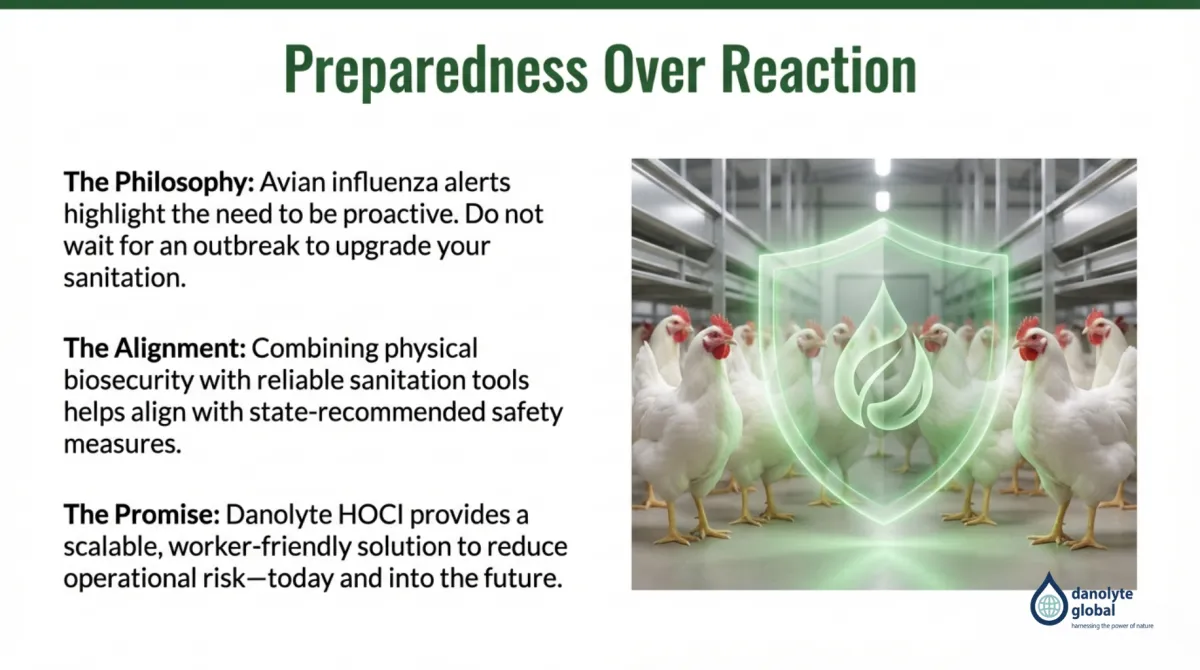
alt="Preparedness Over Reaction — philosophy: avian influenza alerts require proactive sanitation upgrades; alignment: combine physical biosecurity with reliable sanitation tools to align with state-recommended safety measures; promise: Danolyte HOCl provides a scalable, worker-friendly solution to reduce operational risk today and into the future (flock protected by shield graphic)"
alt="Important Regulatory Information — Disclaimer 1: Danolyte HOCl is an environmental hygiene solution supporting agricultural sanitation and biosecurity programs, not a veterinary treatment; Disclaimer 2: not a substitute for comprehensive protocols (wild bird exclusion, controlled access, employee training); reference: based on Kansas Department of Agriculture guidance and general HPAI prevention standards"
alt="Strengthen Your Biosecurity Layer — contact Danolyte Global to discuss bulk supply or on-site generation options for your poultry facility; protecting your flock through innovation and vigilance (facility driveway photo with Click Here button)"

Our Latest Articles

What Disinfectant Kills Norovirus?

Norovirus is stubborn. Learn what disinfectant kills it, why bleach “works” (and why most people fail with it), and how HOCl disinfectant like Danolyte makes outbreak cleaning easier and safer. ...more

Danolyte ,Disinfectant

February 03, 20267 min read

What Disinfectant Kills Norovirus?

How Saltwater Pools Work: The HOCl “Secret” Behind Cleaner Water

Saltwater pools aren’t chlorine-free—they generate HOCl, the active sanitizer. Learn how salt systems work, what causes “chlorine smell,” and a cleaner HOCl approach. ...more

Danolyte ,HOCL &Disinfectant

February 03, 20264 min read

How Saltwater Pools Work: The HOCl “Secret” Behind Cleaner Water

Your Toothbrush is a Biofilm Hub: 5 Reasons a Rinse Isn’t Enough

Stop using a "rinsed-only" toothbrush. Discover how Danolyte HOCl uses hospital-grade, non-toxic power to destroy biofilm and neutralize pathogens in 60 seconds. ...more

Danolyte ,Disinfectant

February 02, 20263 min read

Your Toothbrush is a Biofilm Hub: 5 Reasons a Rinse Isn’t Enough

Disinfection vs Sterilization: What’s the Difference and What You Actually Need at Home & Work

Disinfection and sterilization aren’t the same—and using the wrong one wastes time, money, and peace of mind. Learn the real differences, when to use each, and how EPA-registered HOCl disinfectants li... ...more

Danolyte ,Disinfectant

January 28, 20266 min read

Disinfection vs Sterilization: What’s the Difference and What You Actually Need at Home & Work

What disinfectant kills norovirus?

Stop the stomach bug from spreading. See what disinfectant kills norovirus, how to disinfect correctly (clean + contact time), and why bleach can be harsh on clothes, carpet, and metal—plus a Danolyte... ...more

Danolyte ,HOCL &Disinfectant

January 23, 20264 min read

What disinfectant kills norovirus?
alt="Danolyte Global logo — harnessing the power of nature"

EPA Registered List: N

EPA Registration No 91582-1 

EPA Registration No 91582-KS-1

Customer Care

Copyright 2026. All Rights are Reserved. Danolyte Global LLC